
Granton
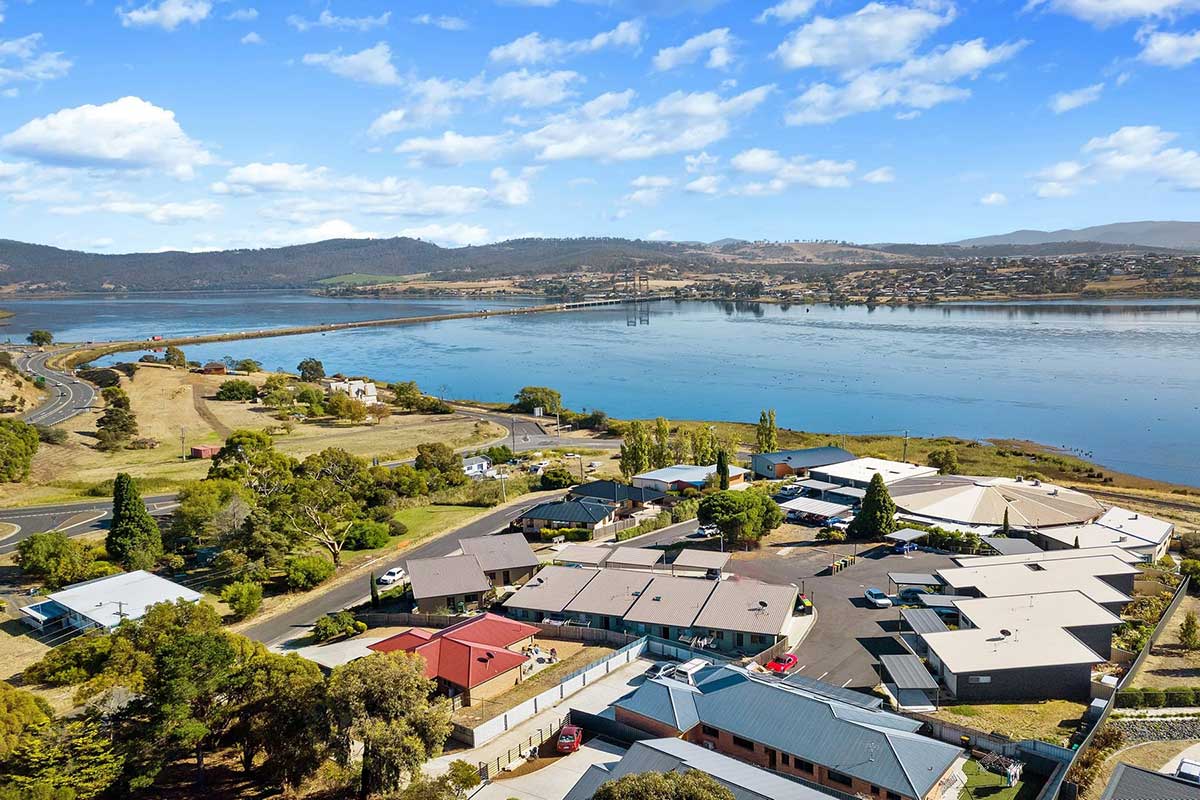
The suburb of Granton straddles the border of two local government areas, with part being located in the Derwent Valley Council and part in the City of Glenorchy. Rust Road is the approximate boundary between the two municipalities at Granton. The locality was originally known as South Bridgewater, and is home to the Granton Convict Site, which consists of the Old Watch House (1838) and the quarry from which stone was extracted for the construction of the Bridgewater Causeway.
Granton takes its name from Granton Railway Station. The name of the station was selected in 1914 when the railway line through the area was built. The name honours Charles Grant, the General Manager of the Tasmanian Government Railways. The Tasmanian Main Line Railway from Hobart to Launceston was completed in 1876. As Chief Engineer, Charles Grant was in charge of construction, then general manager until 1890 when the government absorbed the private lines into the Tasmanian Government Railways.

Our Lady Queen of Croatians and Queen of Peace
Tasmania is home to about 1200 Croatians and their families. The first Croatians came to Tasmania in the 19th century, but most migrated after World War Two, either for political or economical reasons. In the late 1980’s the Croatian community led by Fr Hunski began to build a church at Granton. Fr Hunski not only inspired the work, but did much of the labour in building the tower in particular.
On 8th December 1992, on the feast of the Immaculate Conception, the Church of Our Lady Queen of Croatians and Queen of Peace was consecrated as ‘Our Lady Queen of Croatians and Queen of Peace’ by the Archbishop of Split. Also known as the Croatian Catholic Centre, the church is a legacy to the faith and community spirit of the Croatian people in Tasmania. The church falls under the Catholic Archdiocese of Hobart.
Black Snake Rivulet
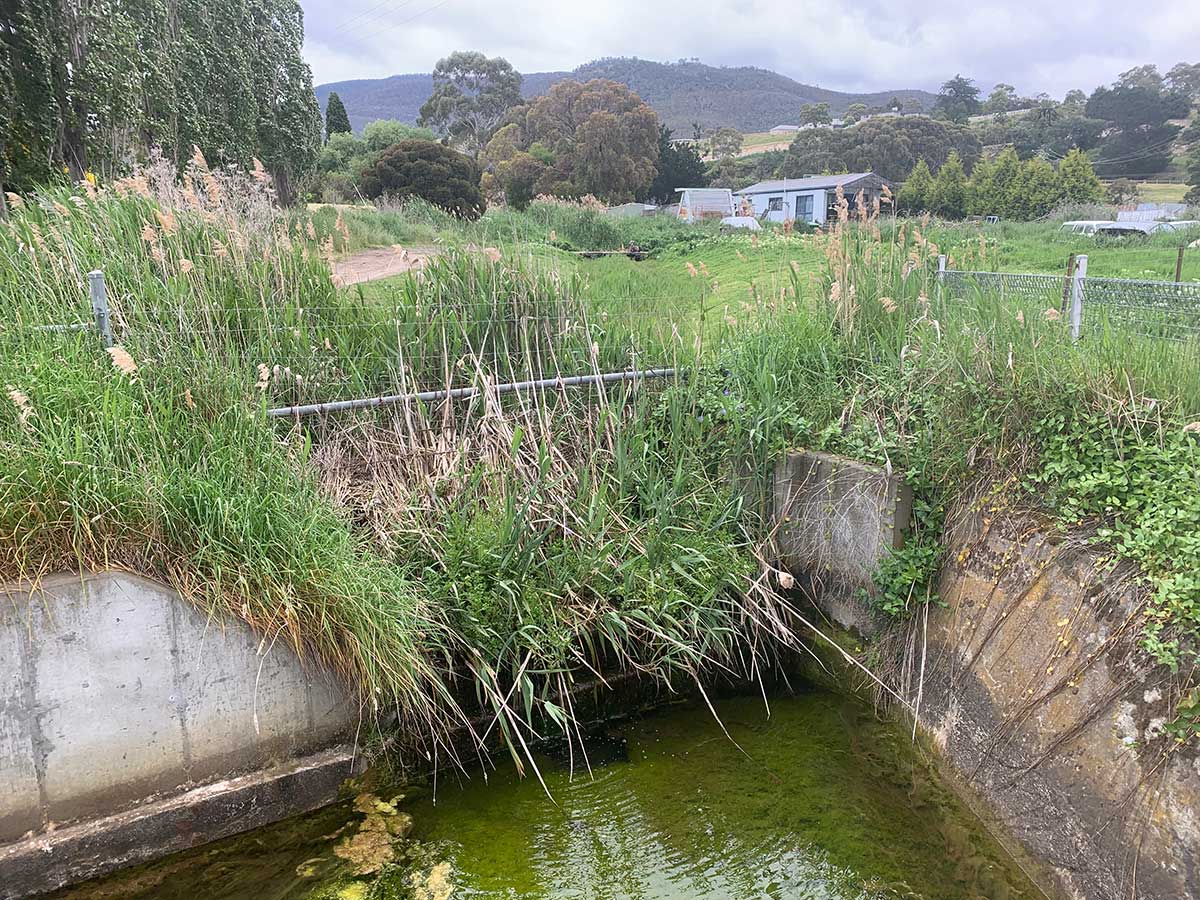
Black Snake Rivulet rises in the upper slopes of Snake Mount and enters the River Derwent near the corner of Main Road and George Street, Granton. By 1813, a parcel of land west of the Black Snake Rivulet was reserved for the town of Bridgewater, but this site was abandoned and the Bridgewater settlement laterdeveloped on the northern shore of the Derwent. The reserve at Black Snake (now Granton) was later used for the Bridgewater Road Probation Station. In 1811 Governor Macquarie, in his diary, makes mention of a trip to the New Norfolk area, where he and his party breakfasted en-route at a farm at Black Snake Point.
By 1816, Black Snake was a substantial settlement. At this time there were two main crossing points on the Derwent River, from Roseneath (Austin's Ferry) to Herdsman's Cove and Old Beach, and from Black Snake to Herdsman's Cove and Green Point. Travel by ferry was sometimes dangerous and often inconvenient, being dependent on the river current and prevailing wind. The Black Snake ferry was operated by Richard Burroughs (or Burrows) from his public house, his service complemented James Austin's more frequently used punt at Roseneath, while also plying a river trade to Hobart and possibly New Norfolk.

The present Bridgewater Bridge, opened in 1956
Bridgewater Bridge and Causeway
The Bridgewater Bridge and Causeway is a road and rail bridge that carries the Midland Highway and South Railway Line across the Derwent River, linking Granton and Bridgewater. The steel truss vertical lift bridge and specially-built causeway connect the Hobart suburbs of Bridgewater and Granton. The bridge was completed in 1946 and accommodates a two-lane highway, a single track railway and a grade-separated footpath. The bridge is the major connector of the Midland Highway on the eastern shore and the Brooker Highway on the western shore.It is the oldest surviving lift span bridge in Australia; lifting of the bridge can cause considerable traffic delays.
Construction on the present steel vertical lift bridge across the Derwent began in 1939. It was briefly interrupted by World War II, but was finally completed in 1946. It consists of a long concrete bridge that leads off the end of the causeway, and a steel lifting section just before the northern bank of the river. The lifting section is one of only a few remaining in the Southern Hemisphere, and is the largest of its kind remaining in Australia. The bridge was designed to last a century without replacement. A small control house stands on the lifting section. Inside are the switches and locks which operate the bridge.
Until 1984, the Australian Newsprint Mills (now Norske Skog Paper) at Boyer, near New Norfolk, upstream from Bridgewater, moved all its produce by river. Many barges were used to transport paper from the mill to the storage sheds at Pavilion Point at Hobart, and for this reason the bridge was required to open very frequently. Consequently, a bridge-keeper lived on-site and opened and closed the bridge when required. However, when the decision was made to cease river transportation, an on-site keeper was no longer necessary, so although the bridge can and does still open, bridge openings are now infrequent. A replacememnt bridge is planned.

Brief History
Europeans began to settle along the Derwent River soon after the first settlements were established at Risdon and Sullivan's Cove in 1803. When the penal station at Norfolk Island closed in 1807, Daniel Stanfield established himself at Green Point (Bridgewater) shortly afterwards. By 1820 the west bank of the Derwent River was lined by farms. By 1816, Black Snake, the settlement that grew around Black Snake Rivulet, was a substantial settlement with a constable, pound, hotel and ferry. A few years later there was a small school with 23 pupils. At this time there were two main crossing points on the Derwent River, from Roseneath (Austin's Ferry) to Herdsman's Cove and Old Beach, and from Black Snake to Herdsman's Cove and Green Point.
Travel by ferry was sometimes dangerous and often inconvenient, being dependent on the river current and prevailing wind. The crossing was also unreliable because ferryman were notorious for delaying their departure to ensure increased business for the adjacent inns. The Black Snake ferry was operated by Richard Burroughs (or Burrows) from his public house and his service complemented James Austin's more frequently used punt at Roseneath, while also plying a river trade to Hobart and possibly New Norfolk. The dangers of crossing the River with a barely sea worthy craft, in adverse conditions, was highlighted in 1818 when Burrough's ferry capsized killing 11 of its 12 passengers, including Burroughs himself.
In 1818-19 a much awaited road was constructed between Hobart and New Norfolk. The road ran along the foreshore around Black Snake and was widely criticised for its inadequate bridges, raised stumps and poor drainage which meant that it was often impassable in winter. Despite its shortcomings, the road assisted the development of the district and the success of the local public house.
The Black Snake Inn
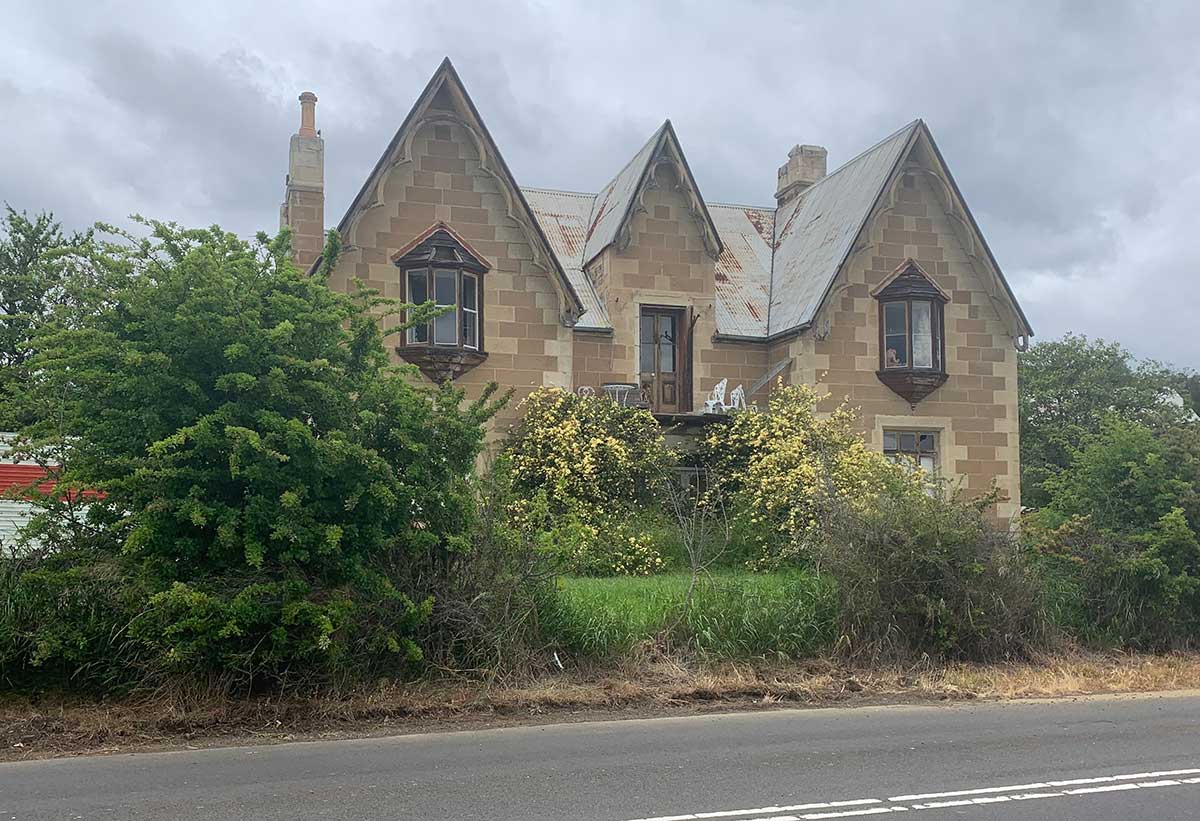
Between 1819 and 1825 the diary of Reverend "Bobby" Knopwood noted frequent visits to the Black Snake Inn which was often referred to as the "half way" house. A plan of the Inn, probably dating from 1826 shows two double fronted buildings. The plan also shows a hut by the Derwent River, possibly associated with the ferry crossing. All early drawings of the Black Snake Inn show structures with a flag pole and flag fronting the River.
Governor Arthur's Land Commissioners visted the Black Snake Inn in 1826, remarking that its licensee, Presnell, was in the "true Style of a selfish Settler" giving all who passed "all the trouble in his power". They suggested that a Government ferry or bridge was essential. Presnell's neighbours complained to the Governor in 1830 about his blocking the road and therefore their access to services. During the 1820s, pictorial images of the Black Snake Inn show a crude double fronted structure.
By 1830, the Inn was a popular stopover and important staging point on the routes to New Norfolk and Launceston. A ferry carried passengers across the Derwent River to Green Point. By 1833, the Inn was acquired by George Robinson. By August he had built a "new house' at Black Snake and advertised the lease for the old inn premises as a possible store. His new Inn was drawn by Louisa Meredith, probably in the mid 1840s and the structure depicted is almost certainly the building known as the Black Snake Inn today, showing the same form. It is possible that a new facade was erected some decades later because the Victorian Rustic Gothic style became more common after the 1840s.
In 1835, when the Bridgewater Causeway was under construction, Robinson offered the Black Snake Inn for lease. He described the Inn as : "that most desirable Establishment ... with all its lucrative advantages from the Coaches and Ferry. The Inn itself is a spacious Stone Building with every convenience, comprising 15 rooms, namely - 3 large parlours, 2 well-finished sitting rooms, 6 up-stair rooms, 4 of which are neatly finished. The kitchen contains a large oven, dresser, &c, with bed-room and store-room attached.
"The stables are large and commodious with coach-house, piggery, fowl-house; also a large garden well-stocked with fruit trees, etc of the choicest kinds. The Inn has been newly stuccoed, and is pleasantly situated on a rise about 40 metres from the Derwent, with a carriage drive in front ... The Ferry crosses to Green Point and its contiguity to the great undertaking at Bridgewater, now nearly complete, ensures it constant traffic. ... It is not above 600 metres from the Bridgewater Causeway, and is rapidly increasing in business, the traffic between New Norfolk and Hobart Town constantly passing the door, which will be increased when the Bridge is opened by that from Launceston and all other parts of the country".
The Causeway was completed in 1836 but it was used mainly for carts and pedestrians, The first bridge linking with the Causeway and completing the crossing was completed in 1849.
The Inn's licence was held until 1856 and four years later the Inn was still a coaching stop, where coaches plying the route from Hobart to new Norfolk changed their horses. Subsequently, the Black Snake became a private residence. In the late 1930s, it was purchased by Keith Dickenson who provided some accommodation for workers during construction of the new bridge across the Derwent River. He also sold fruit from his orchard at roadside stalls, and as demand increased, he began to stock a small range of refreshments for passing cyclists and motorists. Two jetties were located on the adjacent river bank at this time, one belonging to the Dickenson family and another to a neighbour.
Bridgewater Causeway
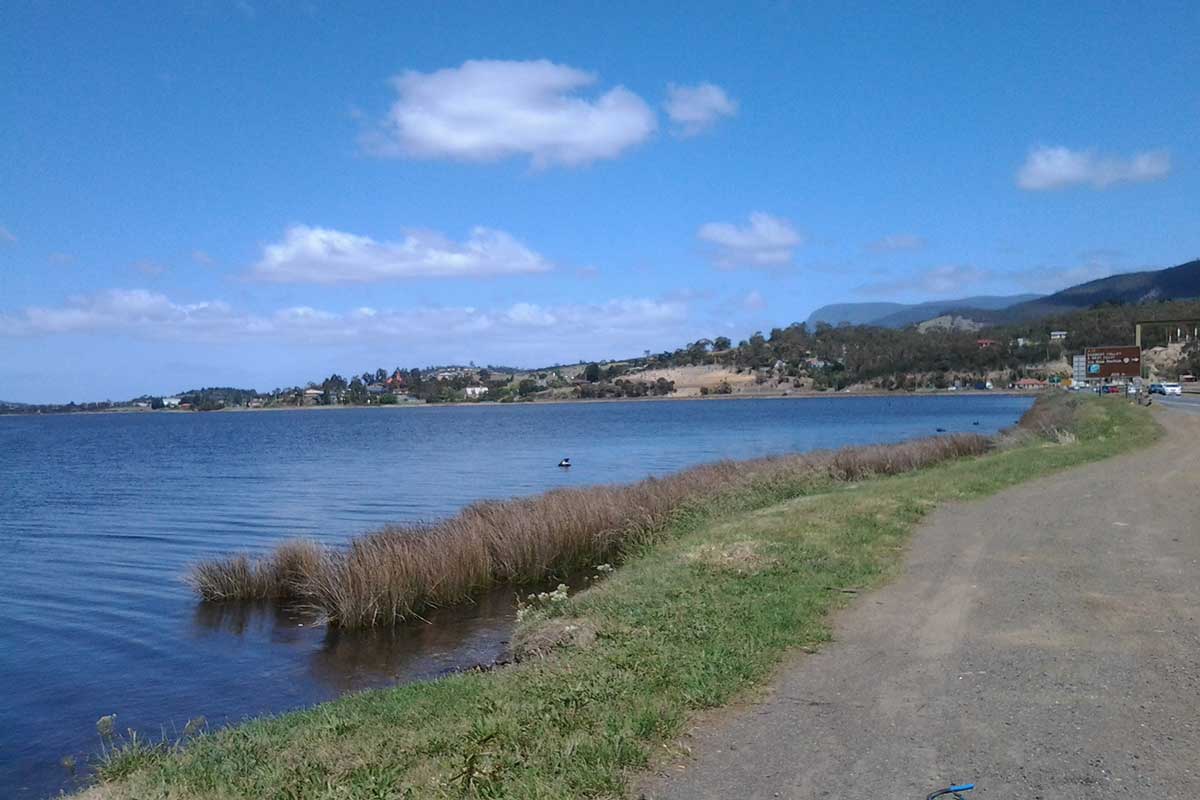
The Causeway, linking the northern and southern mud-flat banks of the Derwent River near Bridgewater was constructed by convict labour during the 1830s. Considerable problems were encountered establishing a firm base to the construction works because of the river silt and clay base to the river. The convict labour was supervised by John Lee Archer and various Government engineers including O'Connor and Giffney. Rock was quarried from the Granton quarry end and wheeled to the end of the Causeway by convict chain gangs. The Causeway became the focus for colonial discontent with Governor Arthur from wealthy land owners who were concerned about the waste of public money. They believed that the convicts would have been more usefully assigned to work on their properties, instead of the Causeway, and would have preferred the funds spent on roads nearer their properties.
On reaching deep water 950 metres from the Granton side, work stopped. A bridge was not constructed until 1848 to a design by Messrs Blackburn and Thomson. The distance between the end of the Causeway and the Bridgewater side was around 1,000 metres. This was bridged by a timber structure on timber piles driven into the river bed. The timber was gathered from the slopes of Dromedary Mountain. The bridge was completed in April 1849. The whole project, including the Causeway, was a kilometre long, and was regarded as the largest convict built civil engineering project yet undertaken in the Australian colonies. Neither the retaining walls in Victoria Pass in the western descent from the Blue Mountains in New South Wales or the roadworks in the Great North Road, where it rises from the north bank of the Hawkesbury River have been assessed as being comparable in scale.
Users of the 1849 bridge were subject to a toll. This bridge and Causeway improved the crossing of the river on the route between Hobart Town and Launceston. The Causeway was raised by 2 to 5 feet in 1863.
In 1869, contracts were awarded for the construction of a railway from Hobart Town to Launceston. The first railway station in the area was constructed in 1876 and the original rail bridge was constructed in 1874. At this time the Causeway was widened for the railway.
A swing-span bridge made of timber on stone supports was built in 1893 replacing the 1874 rail bridge. The 1893 swing span bridge was the first to carry both road and rail transport when it was converted to these dual uses in 1908. At this time the Causeway was widened to relocate the railway and to convert the 1893 swing bridge on the upstream side from road to rail to its original design purpose. This bridge was controlled by the Railway Department's bridgekeeper who rode a bicycle from the station to close the gates at the Causeway end of the bridge, ensuring that the bridge was clear of all road traffic before the crossing of the trains. This bridge caused delays and several near accidents but remained in use until the present Bridgewater Bridge was constructed.
The Bridgewater Bridge was completed in 1942 and the rail capacity in 1947.

Convict Stations, Watch House and Quarry
The Causeway, linking the northern and southern mud-flat banks of the Derwent River was constructed by the convict labour. The quarry located opposite the Causeway provided the 1.80 million tons of crushed mudstone which was extracted by the convicts and wheeled to the end of the Causeway. Considerable problems were encountered establishing a firm base to the construction works because of the river silt and the clay base. The work was referred to as the "Bridgewater folly", where men tried for years to fill up a soft mud hole. The convict labour was supervised by John Lee Archer and various Government engineers including O'Connor and Giffney.
The Causeway became the focus for colonial discontent with Governor Arthur from wealthy land owners who were concerned about the waste of public money. They believed that the convicts would have been more usefully assigned to work on their properties, instead of the Causeway, and would have preferred the funds spent on roads nearer their properties.
Convicts assigned to the causeway were men who had re-offended whilst serving their sentences. They were there for a definite time varying from one to twelve months, and on the expiration of their sentences they were either returned to their masters or transferred to Public Works of less painful employment. With only short intervals of refreshment and repose, they quarried stone, broke it, shaped it as required and wheeled it to the Causeway to form a foundation or to erect piers upon foundations already formed. A flogging triangle was in the courtyard. At one time four convicts attempted to escape from this station by jumping into the Derwent to swim to the other side. One of the convicts was hit by gunfire, and the other three were recaptured.
Even after the completion of the Causeway there was a substantial station with 17 military posted there in 1838. The convict station operated as a probation station from 184, and from 1845 as a road station for parties repairing the Main Road. By 1847 the station was very rundown, LaTrobe visited the area and described its poor condition with some buildings being almost in ruins. At this stage there was one superintendent, two overseers and one storekeeper along with 66 convicts.
The station was decommissioned between 1847 and 1849. In 1847 the convicts were reputedly removed to Jericho in the Midlands. The station was still reported as open in 1849, possibly supplying some labour for the construction of a rolling bridge across the Derwent channel, by 1850 the station was no longer recorded as open. An 1886 plan shows that the site consisted largely of "traces of buildings". This century a number of houses were built on the site which is located between Tarrants Road to the west, Forest Road to the east, and then following the top of the quarry face to a point near the Brooker Highway.
It has been reported that the stone buildings remaining in this area are related to the convict station. The Commandant's Cottage at the corner of the Lyell Highway and Tarrants Road is believed to have been the Officer's Quarters. It stands on a rise overlooking the Derwent River near the Causeway. The Commandant's Cottage is reputed to be the oldest building in the area. Built in 1830 to house the officer or officers, in charge of the construction of the Causeway. It is unclear whether it was home to the Commandant or to various officers who were responsible for the work in progress and the convicts in the employ. The stonework on the house is of high quality, with each stone chosen with extreme care for artistic and colour effect. Stone End is believed to be a late convict station structure reputedly the Chapel and hospital.
Across the river a second convict work party was stationed at Green Point from at least 1832. In 1834 it was a substantial invalid station with 185 convicts. The convicts stationed there were not in the punishment class and so were treated less harshly than those at Bridgewater. The Green Point station was established to separate the various classes of prisoners. In 1835 able bodied prisoners at the jetty were working on the Causeway while invalids were breaking up stones. A year later it was proposed to close the station although it has been suggested that convicts at Green Point may have been involved in prospecting for copper at Bridgewater in 1847. It is unclear where the Green Point party was located, although correspondence from James Murdoch in 1833 requests compensation from the Governor for damage caused by this party to the 800 acres he was renting. Contemporary plans show that Murdoch had property almost exactly where the Midlands Highway now approaches the bridge as well as west of the current location of the township.
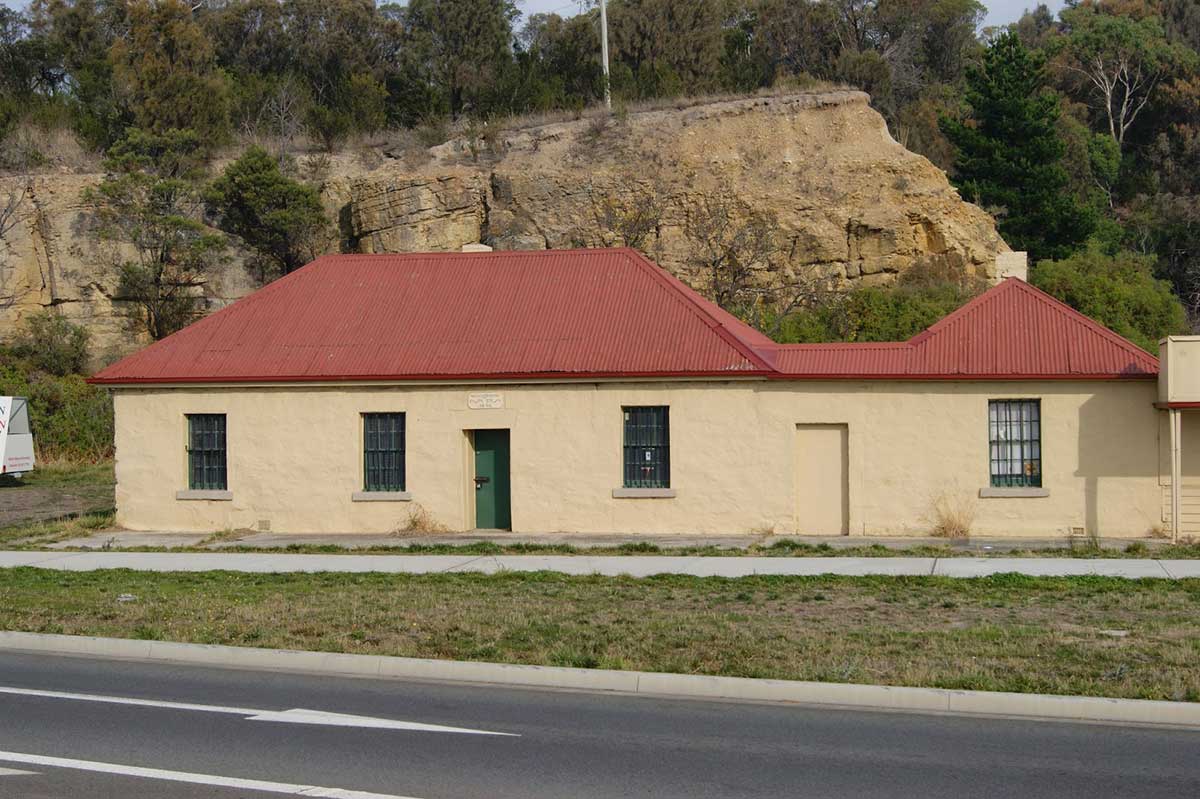
Granton Watch House
The former stone Watch House is situated directly opposite the highway/Causeway junction at Granton on the southern side of the River Derwent. It is reported to have been erected in 1838. It was there by 1847 when it is marked on an undated plan of the crossing made before the rolling bridge was constructed. It was constructed to house the soldiers who supervised the building of the Causeway. Plans to extend the watch house were executed in 1851 providing a Watch House Keeper's Quarters and Women's Lockup. When extended it included a male and female lock-up, watch house keeper's quarters, two exercise yards and a constable's office. The convicts were housed in a stockade at the rear. It is believed that it may in fact have formed part of the earlier convict station complex and, on completion of the Causeway, assumed a watch house function. Its location illustrates the importance of the junction at Granton, it was located adjacent to the junction of the Causeway with the road to New Norfolk.
The Watch House began operating as a service station and store shortly after WWI. The first pumps put in around 1928 with at least six situated along the front, each fuel pump belonged to a different company. A museum is now operated in the Watch House housing the original survey pegs, huge stone blocks and other artefacts from the period.
The land excavated for the quarry was gazetted as the Granton Reserve on 12 May 1921.
The Granton Memorial Hall in the Granton Reserve was constructed in the late 1950s as a memorial for two local residents killed in active service during WWII. Tree plantings and garden seats inscribed with plaques where also placed as memorials within the reserve. The Memorial Hall, is constructed of weatherboard with a corrugated iron roof. Later alterations replaced part of the building using sandstone coloured concrete blocks.
Between 1935-1941 a Pioneer Memorial Avenue of trees was progressively planted on the Main Road (now the Midland Highway) between Hobart and Launceston. A single Chichester Elm remains on the western side of the Causeway near the Lyell Highway junction, it is the only surviving specimen of the Pioneer Memorial Avenue in this area.