
Campania, Tasmania

Campania is small village on the Colebrook Road in the Coal River Valley, featuring historic churches and wineries. Coal River Valley market is held on the second Sunday of the month. Campania is in fact one of the most important wine-producing regions of Tasmania, and has had commercial vineyards since the mid-19th century. Flour Mill Park is a nice place to stop for a rest, picnic, bbq or just relax. There are BBQ huts and large areas of open space to spread out and relax, making it a popular spot with travellers looking to break the journey from the Midlands Highway to Richmond.

Campania is a rural town on the Colebrook Road approximately 35 kilometres east Hobart. Campania’s origins date back to 1829 when Francis Smith (1787 – 1855) was granted land in the Coal River Valley which became known as the Campania Estate. The farm was purchased by Bassett Dickson of Richmond in 1868. After Dickson’s death, James Brock purchased the Campania Estate from his widow in 1873. In 1882 H.J. Brock, his brother William Brock and several other shareholders registered the Campania Gold Mining Company which ended in failure.
The completion of the Tasmanian Mainline Railway in 1876 saw the construction of a railway station on part of the Campania Estate. Around the railway station a township rapidly grew, including several stores, a hotel, flour mill, church, school and sale yards. Campania was proclaimed a township in 1882.
Grapevines were first cultivated by George Weston Gunning at Campania in 1825, a cask of wine being produced the following year. Gunning also pioneered the cultivation of hops at Campania, a crop essential for the development of the brewing industry in Tasmania. Campania Estate was the childhood home of Sir Francis Villeneuve Smith, Chief Justice and Premier of Tasmania. In 1920, Campania Estate was subdivided into twenty-six lots for soldier settlement.
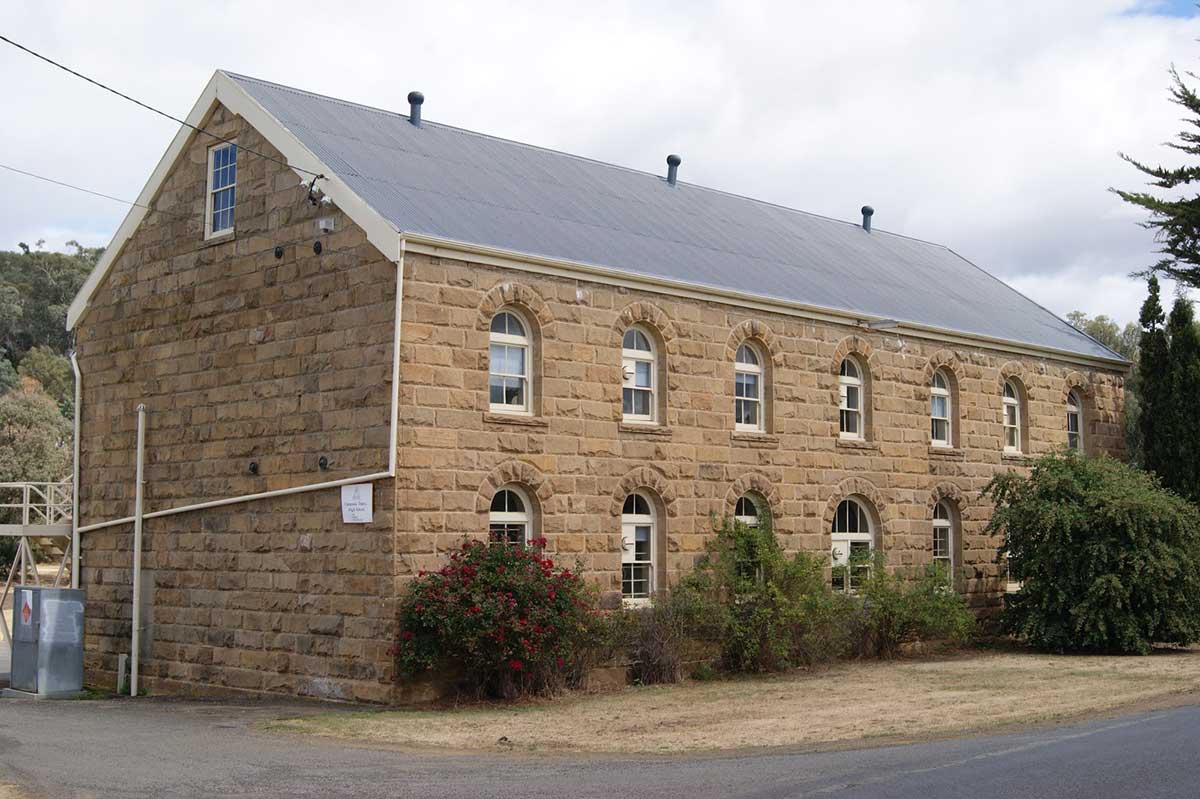
The Old Flour Mill (1884) was designed by William Greenlaw for his cousin H.J. Brock. The two-story mill and storage was built adjacent to the railway. Wheat grown on the Campania Estate and flour ground in the mill won a gold medal at the Centennial Exhibition in Melbourne in 1888.
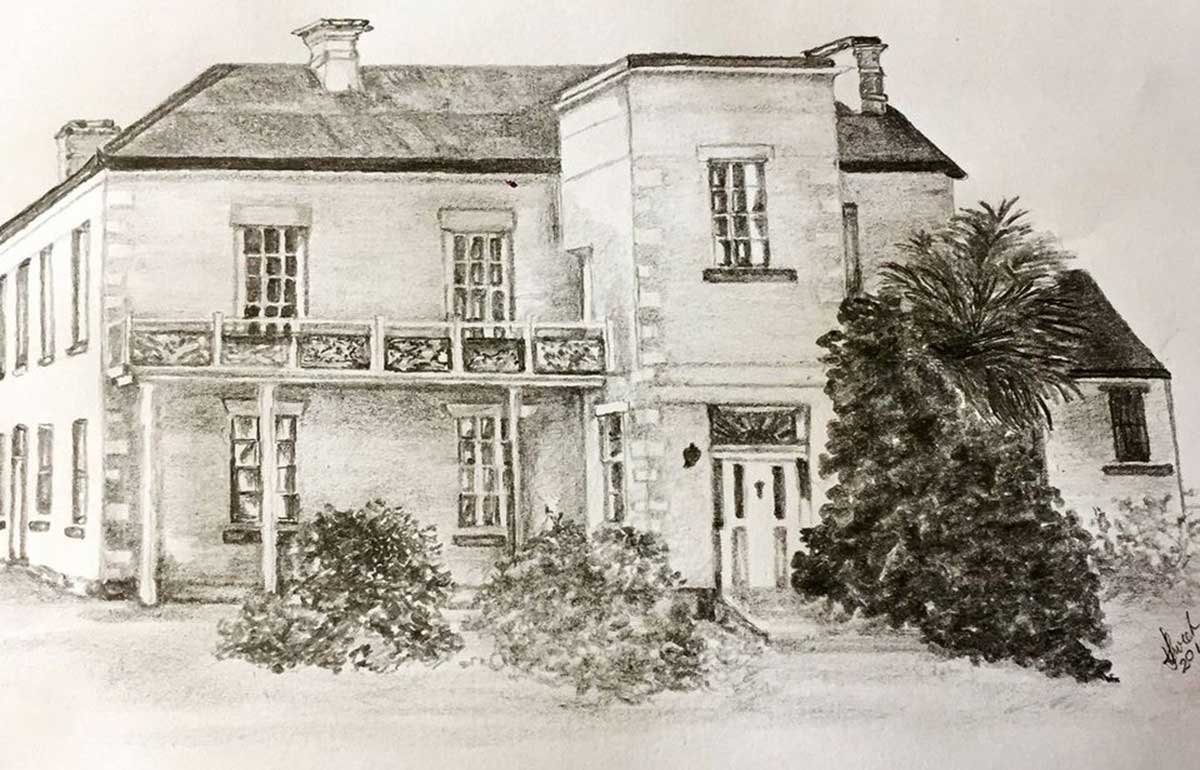
The General Store (1879) was built by J.W. Nichols of Richmond. Subsequent storekeepers included P.J. Nichols, Robert Spencer, John Nichols, Arthur Nichols and Thomas Bidgood. Location: 58 Reeve Street, Compania.
The Campania Tavern (1877) was first licensed to John White. White was the first stationmaster at Campania, and prior to the opening of the Campania Hotel had run a refreshment bar at the railway station.
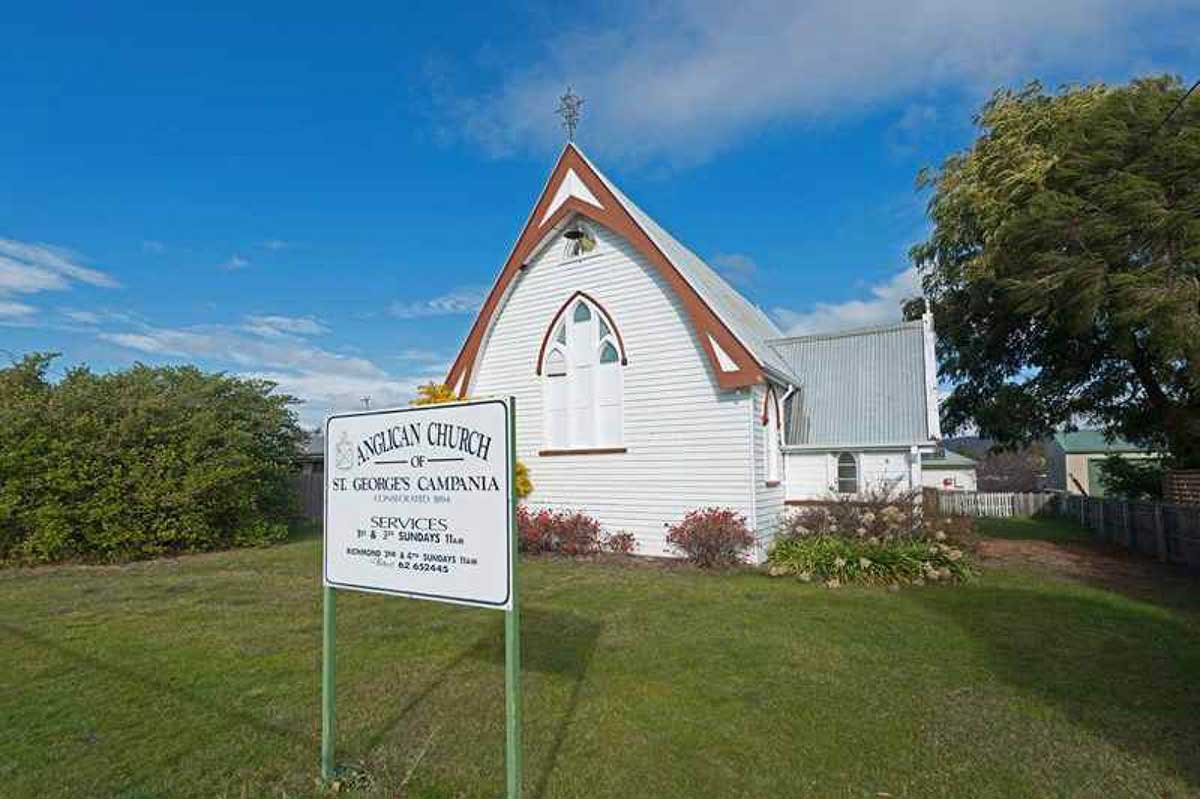
St. George's Church, Campania
St. George's Church (1894), Campania’s only church, was built and furnished at a cost of £450. Mr. and Mrs. H.J. Brock donated £300 towards the completion of the church. St George’s is one of many rural churches that have suffered closure in recent years. It was closed and later sold in 2016, prior to the current sell-off of Anglican churches under the National redress scheme.
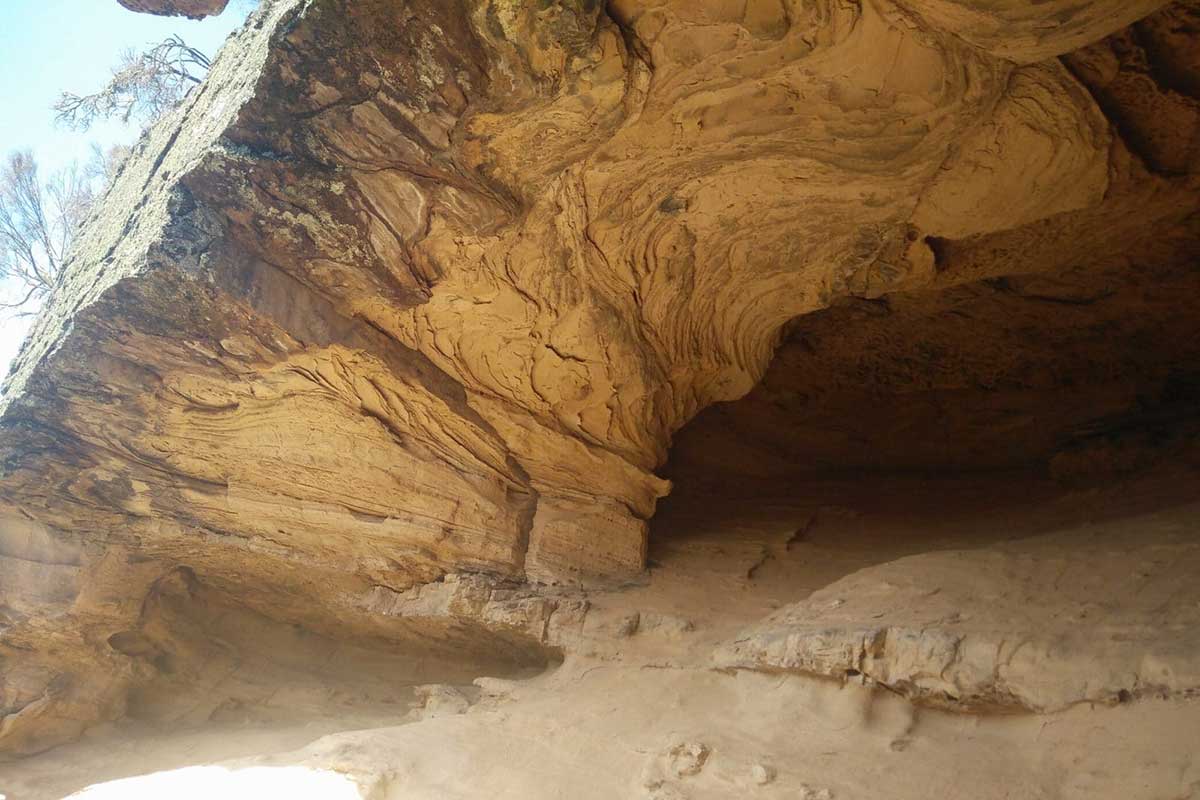
Secret Cave, Chauncy Vale
Chauncy Vale Wildlife Sanctuary: As one of the oldest private conservation areas in Tasmania, the Chauncy Vale Wildlife Sanctuary presents 380 hectares of native bushland to explore. While there are many walking options available in the area, the 6km Brown's Caves loop is perhaps the most accessible and rewarding. This route offers an interesting mix of local history, cave formations and abundant wildlife while strolling through open dry sclerophyll forest. Alternative routes, wildlife guides and historical information are all available from the information boards at the start of the walk. A small donation is required upon entry. The sanctuary can be accessed off the Brooker Highway (A10) in the town of Bagdad. Turn east onto Chauncy Vale Road and follow for 4 kilometres to the picnic area
