
Forestier Peninsula, Tasmania: Walks

Forestier Peninsula is connected to the mainland at East Bay Neck, near the town of Dunalley at its northern end. At Eaglehawk Neck, the southern end of the Forestier Peninsula is connected to the Tasman Peninsula. The peninsula measures about 20 by 15 kilometres.
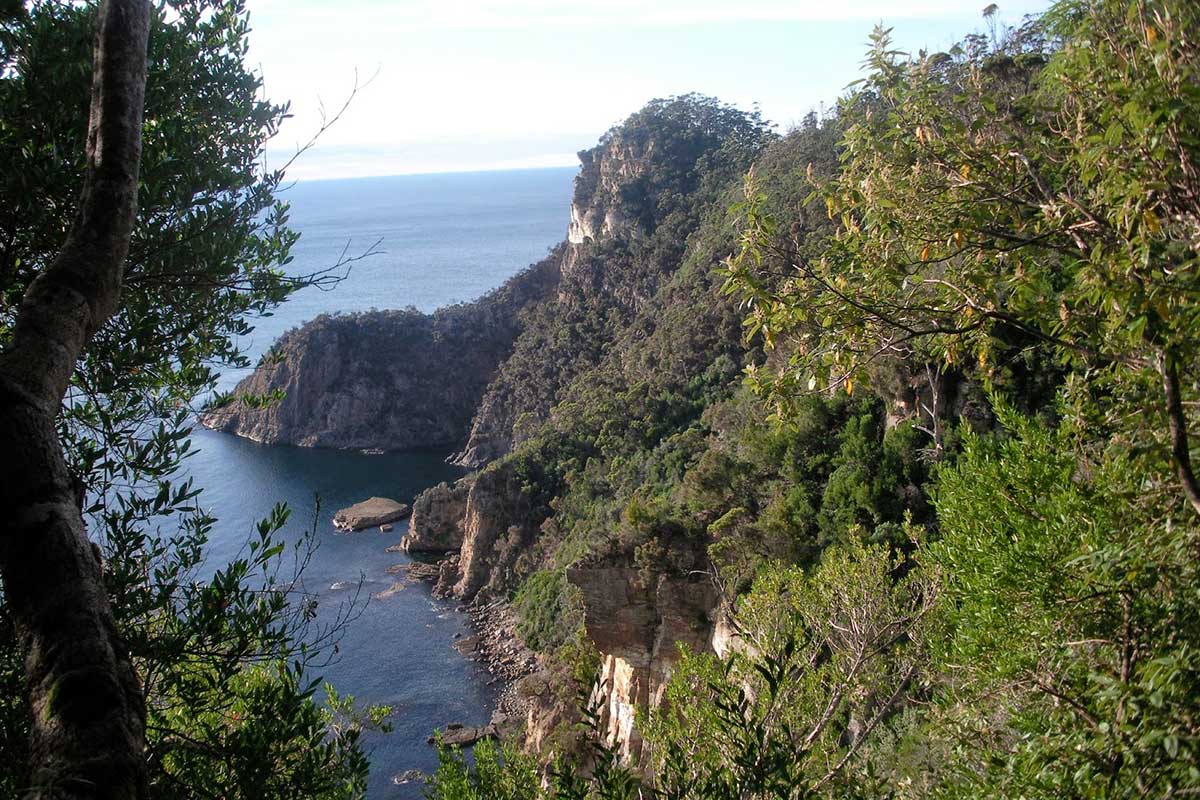
Cape Surville - 3 hours
The start of the walk is in Richardsons Road, Murdunna, on the Forestier Peninsula. Turn off the A9 into Hylands Road at Murdunna and follow this until it becomes Richardsons Road and drive along this until an obvious parking area is reached at 577450 5245982. If the gate is open it is possible to drive further along and park near the start of the track. The track s easy to follow and after a few ups and downs you will reached Cape Surville where there were some great coastal views. There is a commanding view of Deep Glen Bluff across Sisters Bay from the saddle. The cliff face exposes one of Tasmania's unique geographical features where dolerite, granite and sandstone are stacked on top of each other.
Cape Surville was named by Nicolas Baudin’s expedition in 1802. The name of Surville was first given to the cape just north of Monge (now also called Pirates’) Bay, and not far from Eaglehawk Neck, while the Yellow Bluff is miles away to the northward or north-eastward, not far from Wilmot Harbour, otherwise, and more commonly known as Lagoon Bay. Expedition member, naturalist Francois Peron, says that the name Surville was given to the cape in memory of the “unfortunate” French navigator of that name, who visited New Zealand in 1770 and was soon afterwards drowned in the surf at Callao, on the West Coast of South America. Who gave the name of the Yellow Bluff, or the adjacent Humper’s Bluff is not known; Yellow Bluff refers to its colour, and Humper’s Bluff to its shape.
Cape Surville walk notes
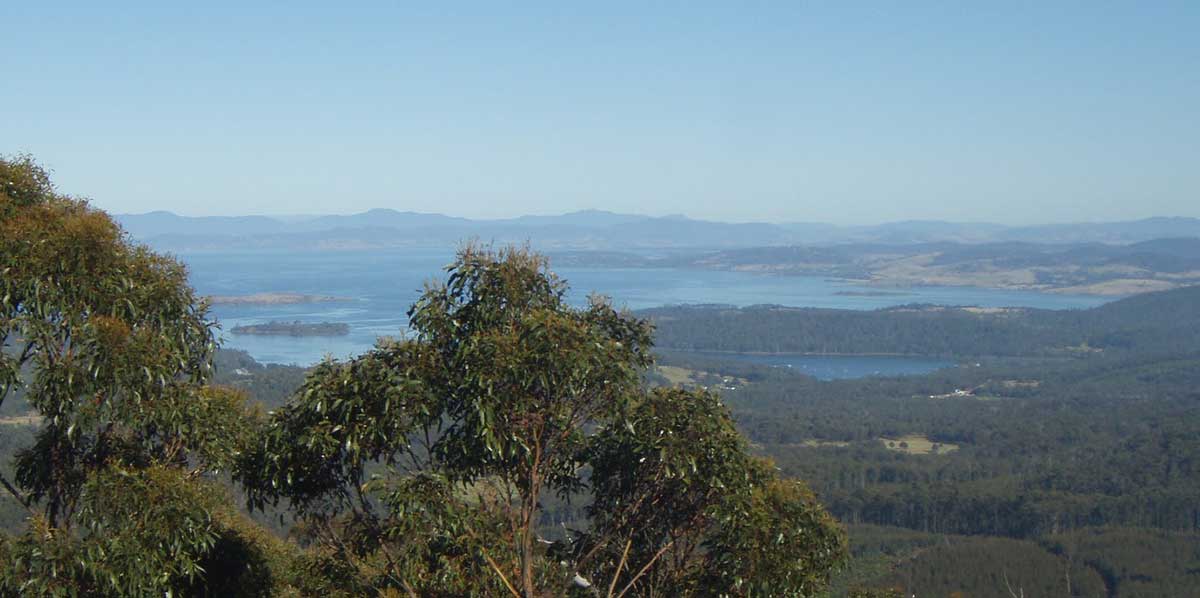
Mt. MacGregor Peak - 3 hours
At 591 metres above sea level, Mc MacGregor Peak is one of the highest points on Forestier Peninsula. The start of the walk is off the Arthur Highway, 5.2km south of Murdunna down a forestry road with a sign marked 'Forestier State Forest'. A signpost at a forestry gate marks the beginning of the 3 hour return walk. The track leads to a trig marker at the summit, near which a large rock provides views to Tasman Island, Cape Pillar, Hippolyte Rock, Cape Hauy and Norfolk Bay. This is the premium spot on the hike for scenic vistas.
Mt. MacGregor Peak walk notes
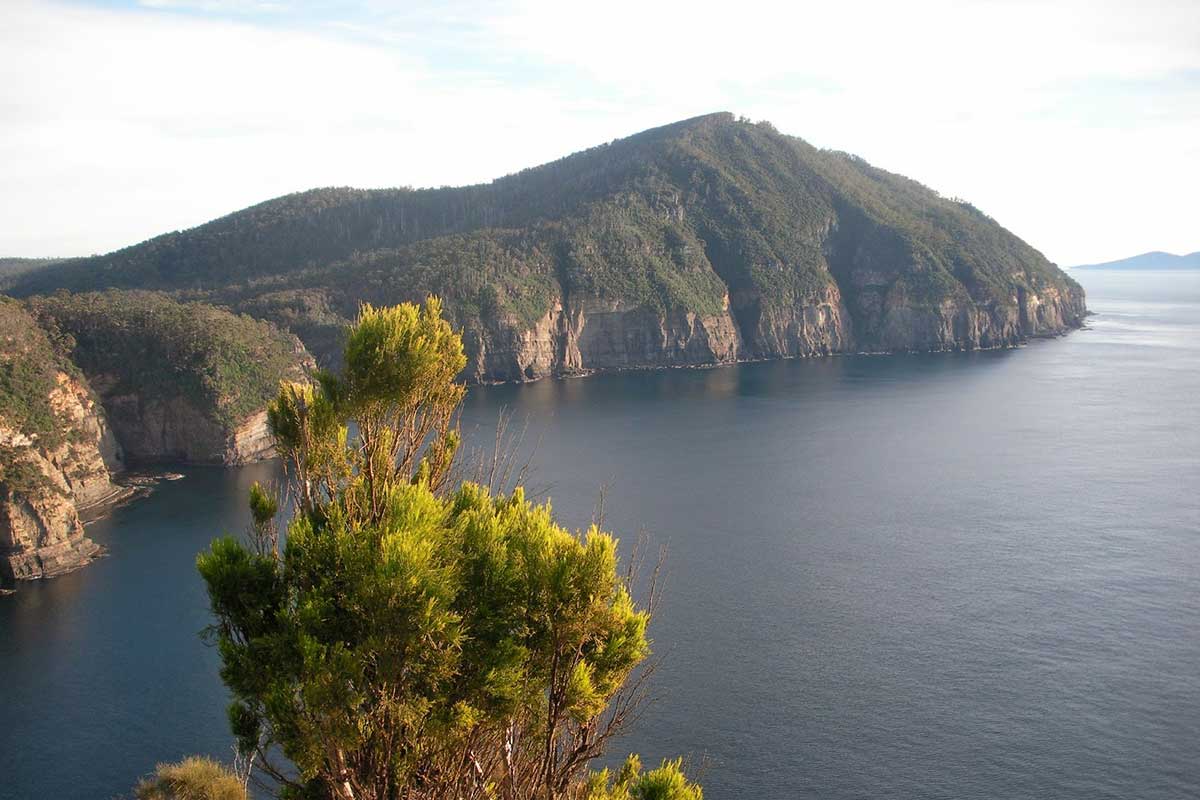
High Yellow Bluff from Cape Surville
High Yellow Bluff - 3 hours
The High Yellow Bluff walk is one of the more challenging day walks on the Forestier Peninsula. There are some rough steep and rocky sections and part of the walk is over a taped route with no formed track. You can either begin from the Hylands Road carpark and walk the 3kms along Richardsons Road to the start, or drive and park near the beginning of the track. It is a 3 hr return walk from there.
High Yellow Bluff walk notes
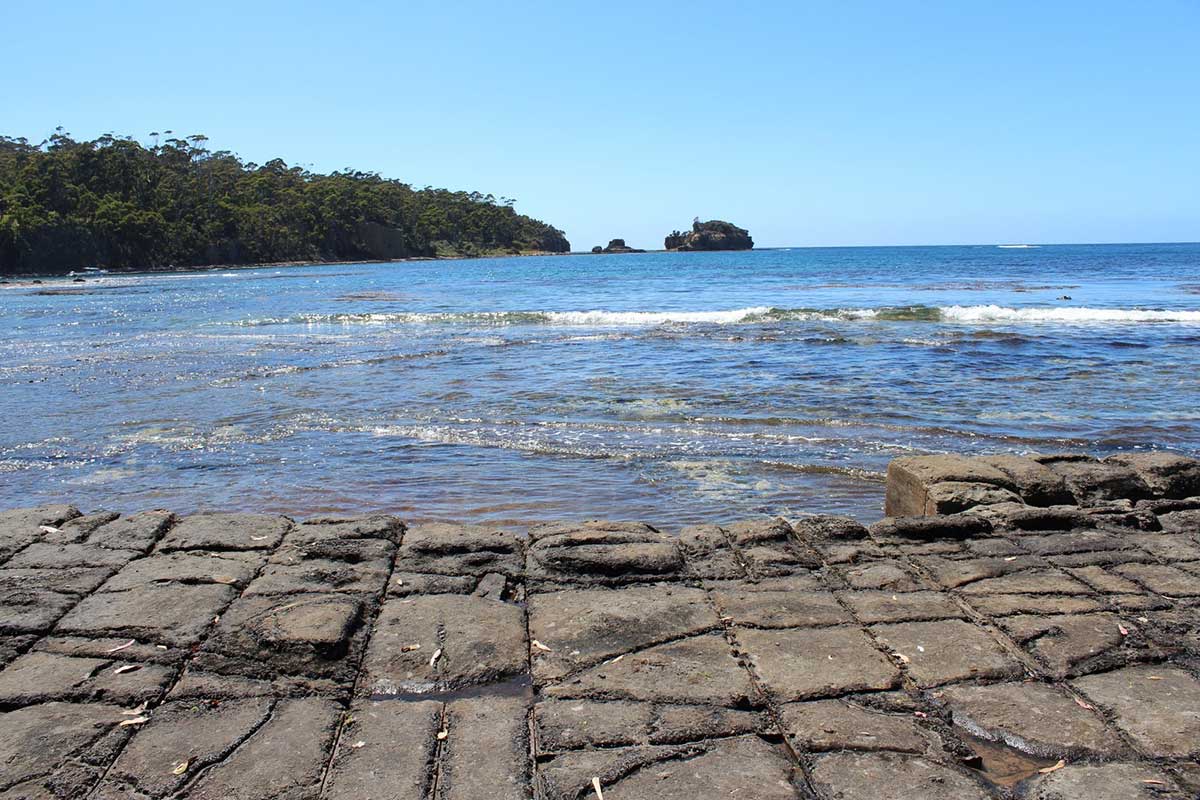
Tessellated Pavement
By far the most well known feature of Forestier Peninsula is the Tessellated Pavement, situated a short distance from Eaglehawk Neck on the shoreline below the Lufra Hotal. This unusual geological formation gives the rocks the effect of having been rather neatly tiled by a giant. The pavement appears tessellated (tiled) because the rocks forming it were fractured by earth movements. The fractures are in three sets. One set runs almost north, another east north east, and the third discontinuous set north north west. It is the last two sets that produce the tiled appearance. This tessellated pavement is one of the largest in the world.