
Jerusalem Probation station, Colebrook
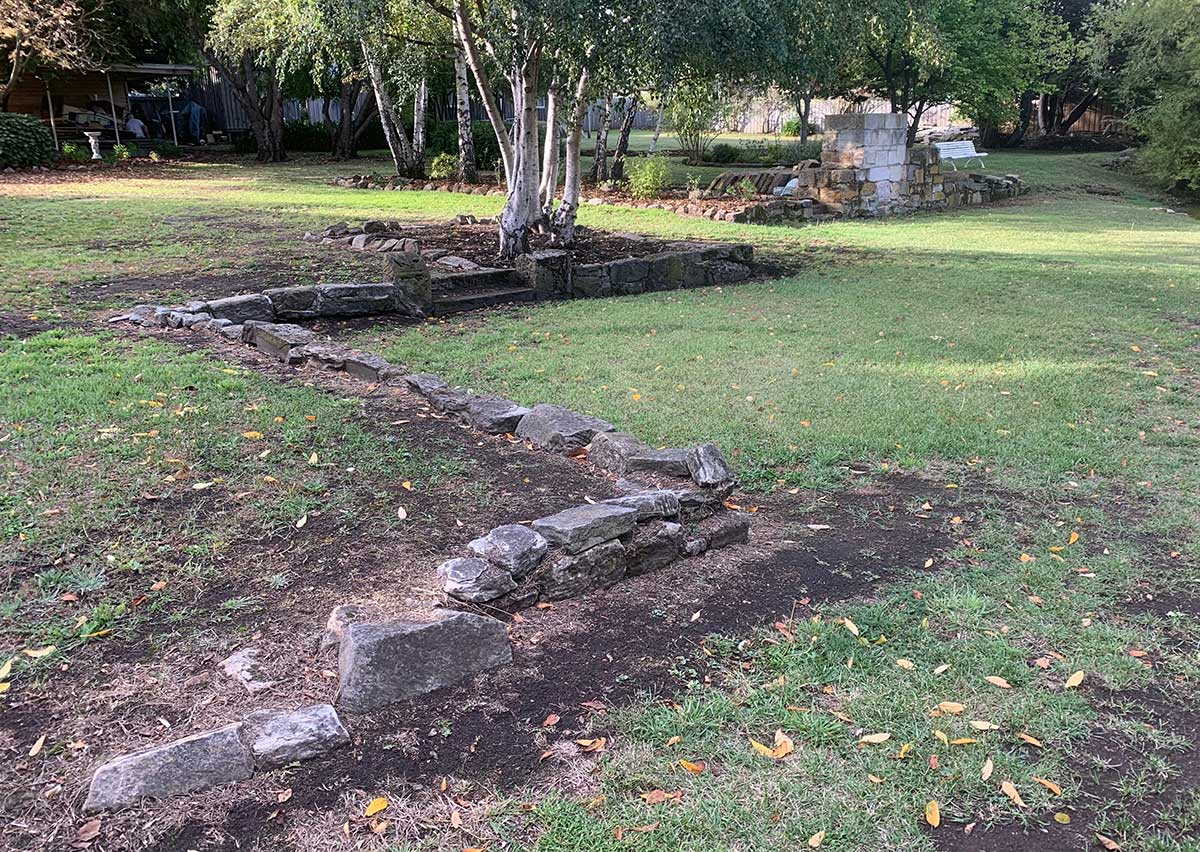
Stone foundations and a section of stone wall behind ‘The Chimneys’ are among the few remaining remnants of the Jerusalem Probation Station
The Convict Probation station at Jerusalem (Colebrook) was established in 1839. Remnants of the station, which included a barracks, hospital and church, still exist. Most of the surviving buildings in the precinct, situated between Maconochie and Franklin Streets to the north of Richmond Street, were added to the Tasmanian Heritage Register in 2010. The perimeter walls of the probation station were demolished in the 1850’s and some of the rubble was used in the footings of St Patrick’s Catholic Church.
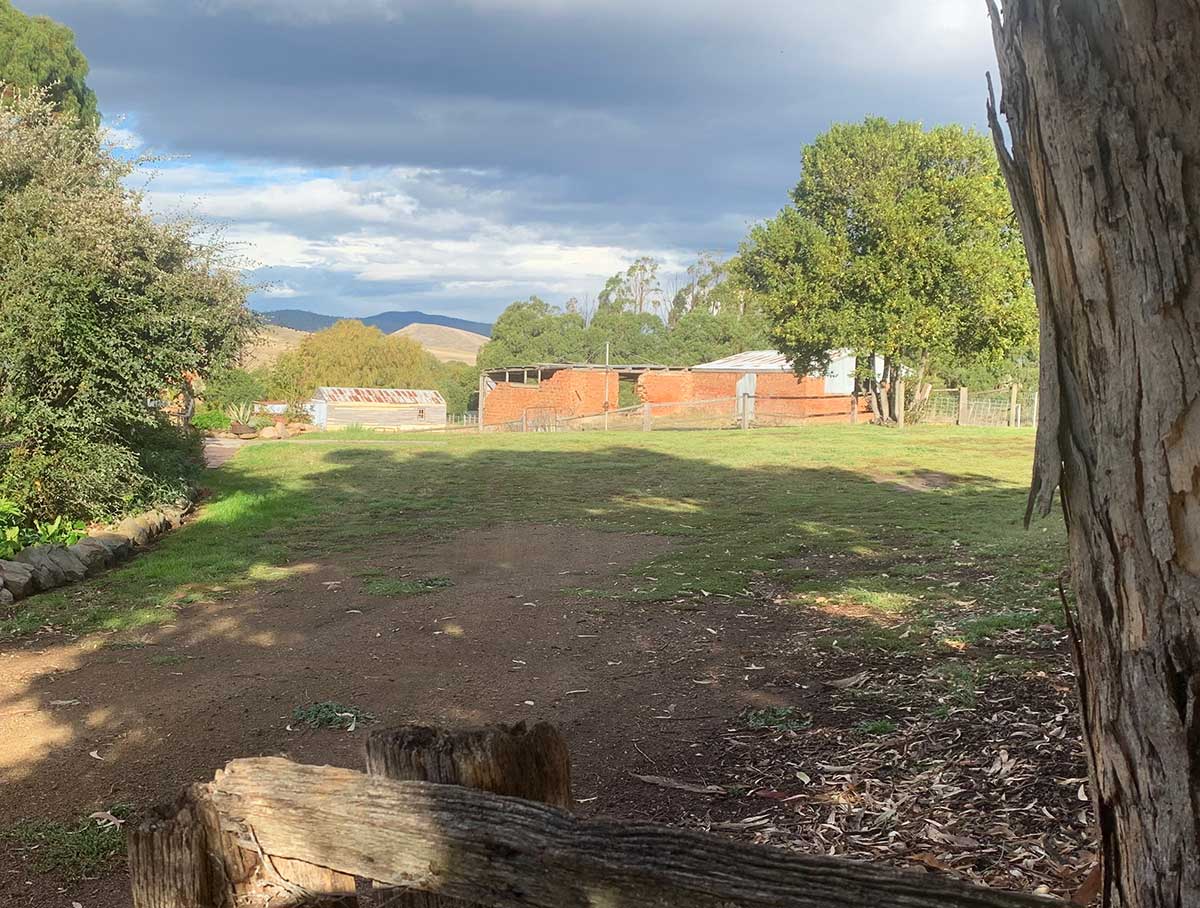
After the closure of the probation station the "Old Convict Church" was used by the town's Anglicans until the early 1870's when services were moved to a local schoolroom. By the time St James church opened in 1884 the convict church had fallen into disrepair and was sold to Mr. William Rumney who converted it into a barn. The brick building had a brief revival in 1898 when it was leased by Captain R. Storey and was used as a venue for concerts and dances. During this time it was known as Waterdale Hall. After the opening of Colebrook public hall in October 1901 the old church reverted to being used as a barn.

The Probation System
In the late 1830s a new system of convict management called Probation was introduced in Van Diemen's Land. Throughout the probation period it consistently had around 30% of the colony’s male incarcerated population. The Probation system lasted from 1840 until 1857 and was very much crafted in accordance with new penal thought. It graded convicts by their crimes and rather than focusing on punishment, it was structured towards reform by requiring progression through stages, before ultimately earning freedom.
Under the Probation system, first, male convicts spent time in a Probation Gang heavily supervised and engaged in hard labour on infrastructural development, such as roads and bridges. For men, the duration of this initial stage was governed by original sentence length (e.g. a seven-year sentence meant 18.7 months on the gang; a 14-year sentence meant 26 months), and made variable according to colonial behaviour.
Women spent a shorter time of six months in what was known as a Female Factory. Here the inmates were familiarised with life in the colony and taught a strong work ethic that would assist towards their eventual transition into the wider community.
Stage two saw convicts leave the gang and become Probationary Passholders. This entitled them to enter the community at large to work under the supervision of a free settler, who provide them with board and lodgings in exchange for the work they did. The duration of the passholder phase was again variable and convicts who had rebelled against the authority of the guards who supervised them, or had caused disharmony within their Probation Gang often had their time in the gang greatly extended and hence their time as a Passholder reduced.
Beyond Probation, the third and final stage in their progress towards freedom was the granting of a "Ticket-of-Leave" for the rest of their sentence. This enabled convicts to work "on their own hands" for whom they picked, or even to establish a business venture of their own where they worked for themselves.
Convicts were still subject to a constraint on movement and were required to report regularly to a government officer as they had been with their Probation Pass. A “Ticket” could still be rescinded, conversely early release might be granted through a "Conditional Pardon" where all personal freedoms were granted except leaving the colony, until the expiration of their sentence when a "Certificate of Freedom" was obtained.
For those in this last stage before freedom, 75 Probation Stations had been established throughout the colony where convicts could report their progress, get assistance in obtaining work, or be provided with food and shelter while awaiting employment or when travelling from one area to another.
As well as undergoing a regime of labour, a convict’s progression through the probation system included both education and religious instruction - the Jerusalem Probation Station adequately catered for all three, as it included a school and church.
The prisoner population of the colony of Van Diemen’s Land peaked in 1846, with 12,630 prisoners located in 66 stations, gangs, depots, barracks and factories around the colony. The isolated Tasman Peninsula had the greatest concentration, with five new stations established during 1841-43 (in addition to Port Arthur, Coal Mines and Point Puer).
There was a hiatus in transportation between 1846-48. When resumed, transportation continued under the ‘Exile’ system, whereby convicts first served a term of incarceration in the British Isles prior to transportation to the colony. This effectively saw the need for primary probation stations diminish between 1848-53. By the time the last transport arrived in 1853, twelve stations remained – located on the Tasman Peninsula, Hobart and Launceston.