Cape Grim, Tasmania
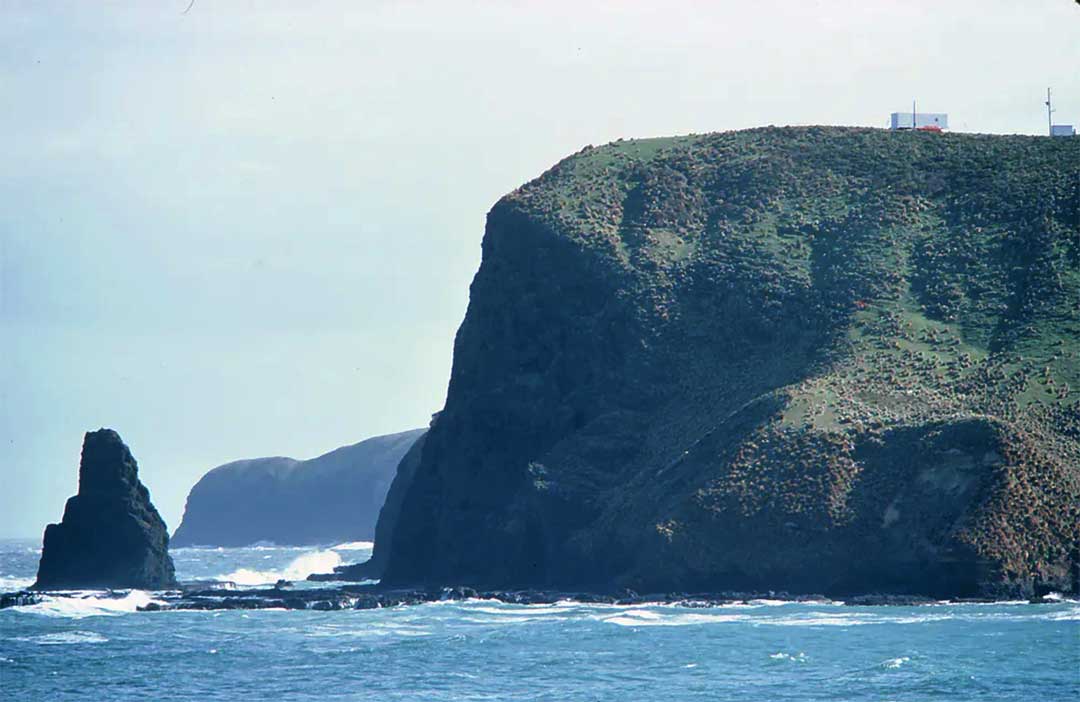
What makes Cape Grim unique is its isolated geographic location. Being the extreme tip of the north-west corner of Tasmania, the next land mass directly west of Cape Grim is not Africa (it's too far south), but the southern tip of Argentina. As a result, Cape Grim is believed to have the cleanest air in the world. Cape Grim is home to Woolnorth, the dairy farm operated by one of Australia’s oldest companies, The Van Diemen’s Land Company (VDL). The property is still under Royal Charter. VDL was established by royal charter in 1825, encouraged by Tasmania’s ability to raise fine-wool sheep in the 20 years since its settlement.
Cape Grim and the Doughboys were the site of intraplate basaltic volcanism about 24 million years ago. Exceptionally well preserved examples of submarine pillow lavas, sills, oblate lavas, volcanic breccia and tuff are exposed in rock platforms and steep coastal cliffs. Please note there is no private access to this site. Please contact the Stanley Visitor Information Centre for tour options.
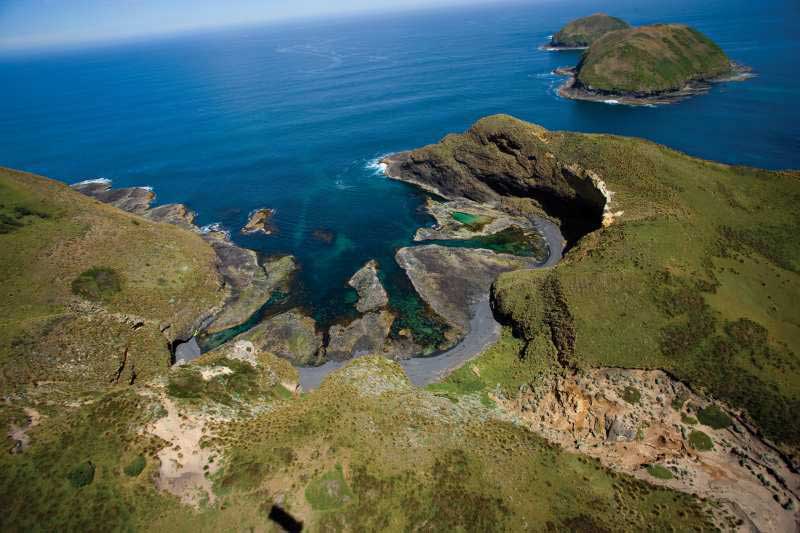
The mis-named Suicide Bay at Cape Grim was the scene of the events of 10 February 1828 in which a group of Aboriginal Tasmanians were ambushed and shot by four Van Diemen's Land Company (VDLC) workers, with the bodies of some of the victims then thrown from a 60-metre cliff. About 30 men are thought to have been killed in the attack, which was a reprisal action for an earlier Aboriginal raid on a flock of Van Diemen's Land Company sheep. The escalating spiral of violence was probably triggered by the abduction and rape of Aboriginal women in the area. The massacre was part of the "Black War", a period of violent conflict between British colonists and Aboriginal Australians in Tasmania from the mid-1820s to 1832.
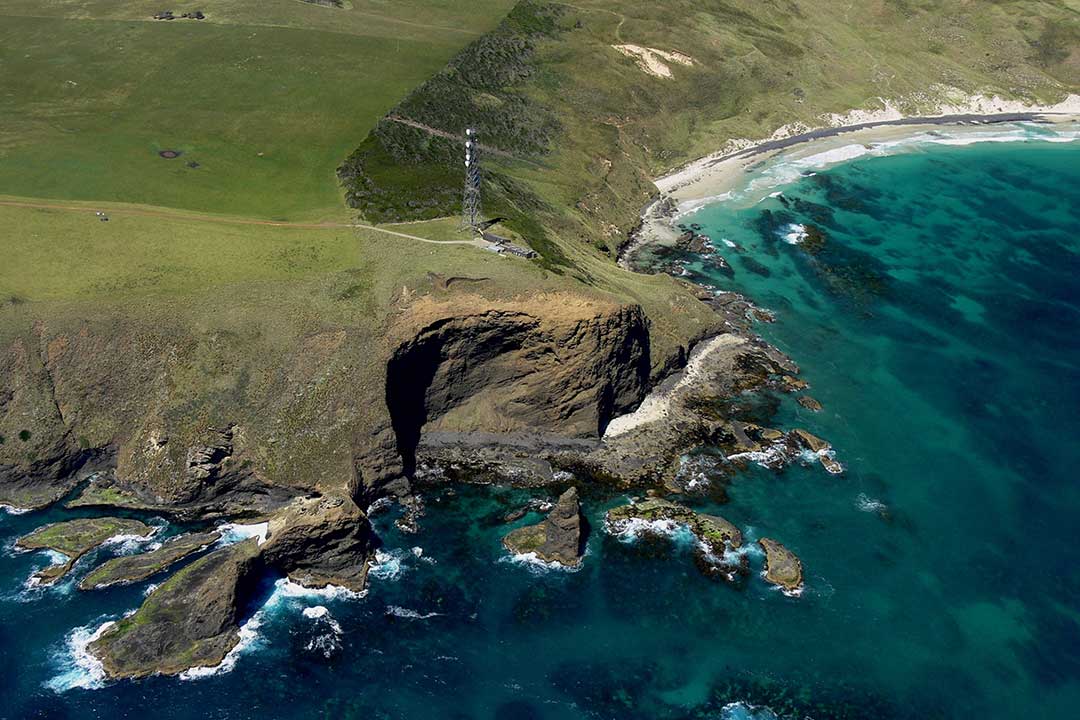
The name is taken from the property of the historic Van Diemen's Land Company of which it is a part. Woolnorth Point is the extreme tip of Cape Grim, the northwestern point of Tasmania. The Peerapper name for the cape is recorded as Kennaook. It is the location of the Cape Grim Baseline Air Pollution Station which is operated by the Australian Bureau of Meteorology in a joint programme with the CSIRO. Two small beaches occupy the western side of the point. A vehicle track crosses the point to reach the southern end of the beach. Both beaches are backed by generally dense scrub.
Cape Grim beef is premium grass fed beef from Tasmania's far north-west, one of the most pristine environments in the world. The world's cleanest air, abundant pastures, well bred British breed cattle, and dedicated caring farmers combine to bring you grass fed beef that is regarded as the best available anywhere. No hormones or genetically modified feeds are used in the production of Cape Grim beef. All Cape Grim beef is graded under Australia's advanced and unique MSA (Meat Standards Australia) grading system.



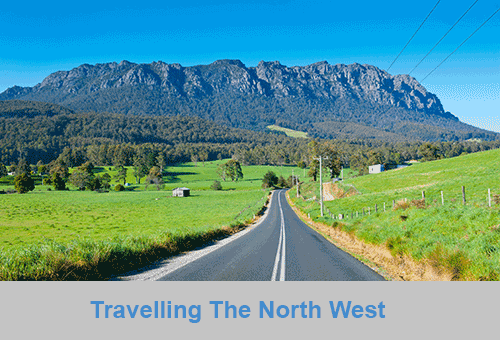
The North West coast extends from Burnie all the way west to Cape Grim, Tasmania's rugged north-west corner. Along the way are the beachside towns and villages of Wynyard, Boat Harbour Beach, Stanley and Smithton, as well as the rugged volcanic headlands od The Nut (Circular Head), Rocky Cape and Table Cape.
Full Itinerary


The first European settlement of Tasmania's Central Coast commenced in the 1840s, the rich basalt soil proved ideal for cropping, and today agriculture is the principal contributor to the area’s economy. Motorists travelling along the north-west of Tasmania are well served by the National Highway. Central Coast, however, is fortunate to have retained a small section of ‘old highway’. This scenic coastal detour hugs the headlands and sandy shores from Ulverstone through to Howth and is well worth the extra time taken to travel this scenic route.
Full Itinerary

Boasting rolling farmland, the hinterland of Tasmania's central coast is home to some of the region's finest agriculture and local produce, its narrow roads making their way through lush farmlands on their way to the alpine terrain of Cradle Mountain. The area is world-renowned for its bush-walking, mountain ranges and canyons, and laid-back small towns set againt mountainous backdrops.
Full Itinerary

The area is dominated by the Tarkine, a wilderness area containing a wildly diverse landscape, a world of natural treasures including Australia's largest patch of temperate rainforest, mountain ranges, wild river and cave systems and buttongrass moorlands. Waterways can be explored by canoe, kayak and riverboat cruises through forests of blackwood, myrtle and celery top pine all the way to the sea.
Full Itinerary

Set against the backdrop of the Great Western Tiers, the Mradner Valley is located at the western end of the Central Coasy Hinterland, located midway between Launceston and Devonport. Dotted among the farms of the area are numerous small towns, each with their own individual character and colonial-era charm. Deloraine, on the banks of the Meander River, has become a centre for artists and craftspeople, drawn by the lifestyle and inspired by the stunning scenery.
Full Itinerary

2 to 3 hours drive from Devonport and Burnie, Tasmania's West Coast region is made up of serene natural harbours, rugged coast, densely forested mountain ranges, fast flowing rivers, steep gorges, rainforest wilderness and ghost towns. The region has some of the most pristine and beautiful wilderness in the world, encapsulated in the World Heritage listed Franklin-Gordon Wild Rivers National Park. Bushwalkers are rewarded by spectacular nature sights. Even the less energetic can enjoy the untouched rainforests while cruising the Gordon and Pieman Rivers.
Full Itinerary
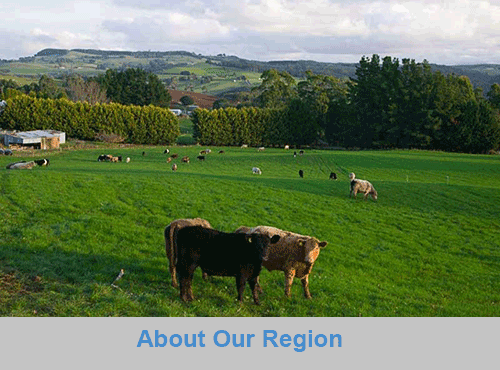
The North West region of Tasmania covers a vast area including the towns of Devonport, Burnie, Cradle Mountain National Park and the Tasmanian west coast as far south as Strahan and Queenstown. The gateway to this region is Devonport, with an airport and the Spirit of Tasmania (ferry between Victoria and Tasmania) terminus. The port handles much of the export produce from the rich agricultural areas around Devonport. The town itself is used as an arrival or departure port for most travellers rather than a destination itself.
A major farming area stretches from Devonport along the coast to Stanley. Many of Australia's finest vegetable and dairy produce come from this region. Stanley is an historic fishing village with a large volcanic headland - The Nut - accessible by chairlift. Far out to the north-west in the stormy waters of Bass Strait, King Island consists very much of uninhabited bushland teeming with wildlife. The island produces some of the best dairy products, for which it is famous.
Cradle Mountain-Lake St Clair National Park, in Tasmania's World Heritage Wilderness Area, offers a rugged environment with many wilderness retreats and walking tracks. Icy streams, ancient pines, glacial lakes and wildlife surround the jagged contours of Cradle Mountain. The area is one of the most glaciated in Australia and includes Tasmania's highest mountain, Mt Ossa (1617 metres) and Lake St Clair, Australia's deepest natural freshwater lake, the source of the River Derwent.
The West Coast area of Tasmania is made up of rugged coast, mountain ranges, flowing rivers, steep gorges, rainforest wilderness and ghost towns. Strahan is situated on Macquarie Harbour and is the starting point for Gordon River cruises and air tours over the South West Wilderness. Strahan is the only town on this rugged and dangerous coast.