
Sulphur Creek, Tasmania
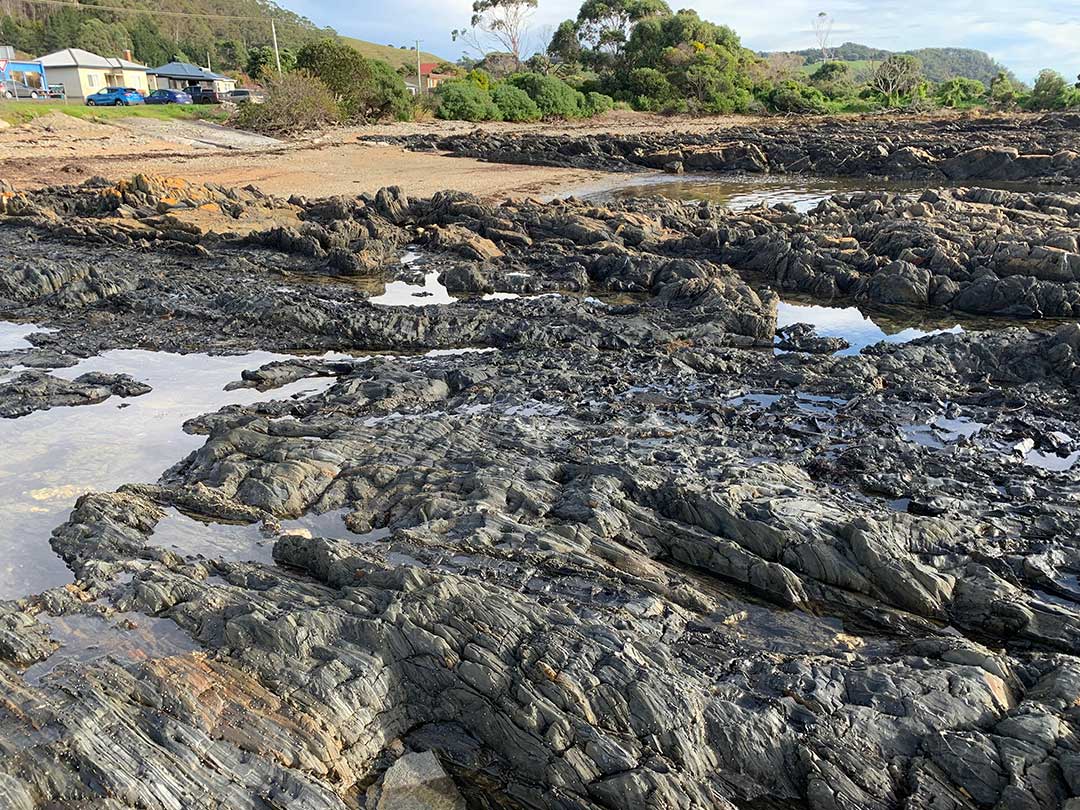
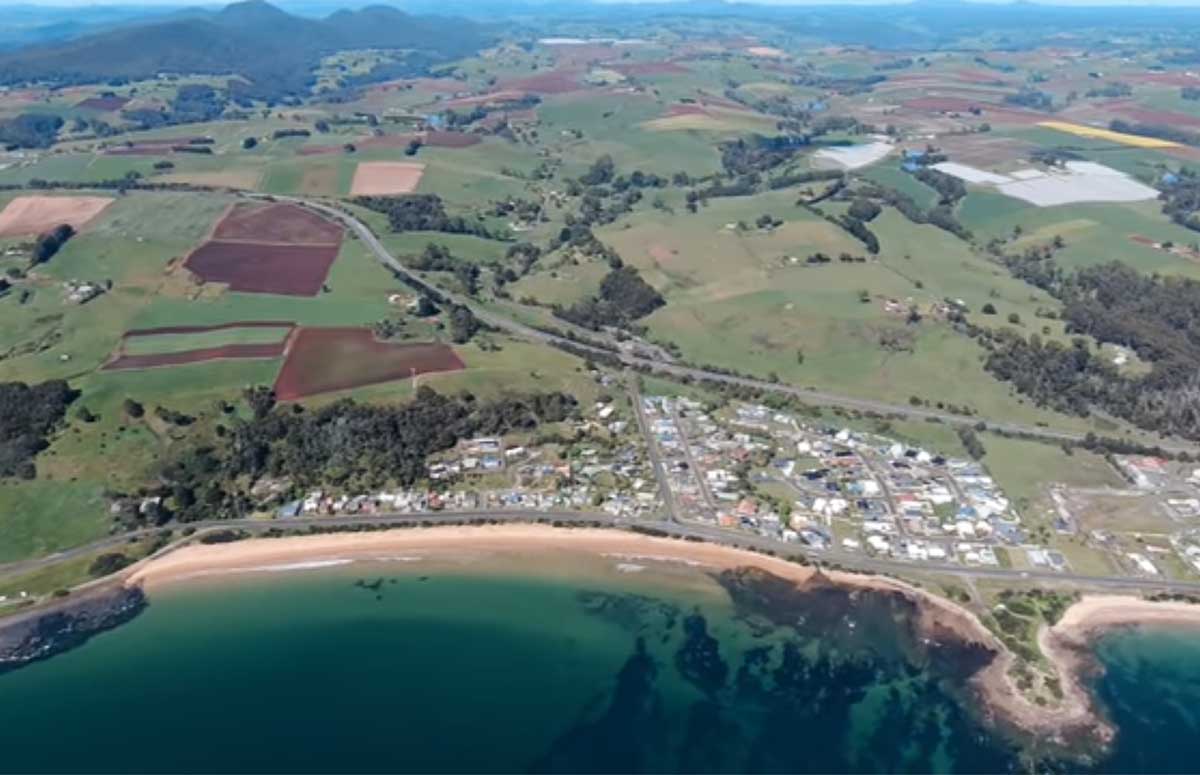
Sulphur Creek is a locality and small rural community on the shores of Bass Strait, to the west of Penguin. Sulphur Creek has a curving 250 metre long sandy beach bordered by rocky shore and boulders. Volcanic activity has been the main determinant of the current landscape of North-West Tasmania. Weathering of the numerous lava flows has resulted in both the rich red soils so important to the agricultural industry and very prominent landforms, such as the amazing rock formations lining the shore near the boat ramp here.

Sulphur Creek is reputedly named because of the perceived smell of sulphur in the area when first explored by Europeans. Sulphur is associated with volcanic activity. This site is very interesting in that it contains rocks from the geological period just prior to, and the geological period following the most violent period of volcanic activity when chains of volcanoes formed across Tasmania.

Farmland along Creamery Road. Sulphur Creek flows through the area surrounded by trees (lower centre)
For many years Sulphur Creek was a venue for horse racing. The land on which a Primitive Methodist church was built formed part of a racecourse and was donated by Andrew Ballantyne with the intension of breaking up the racing. In 1929 the church suffered a disaster when it was swept off its foundations when the creek flooded during the catastrophic State-wide flooding during April of that year.

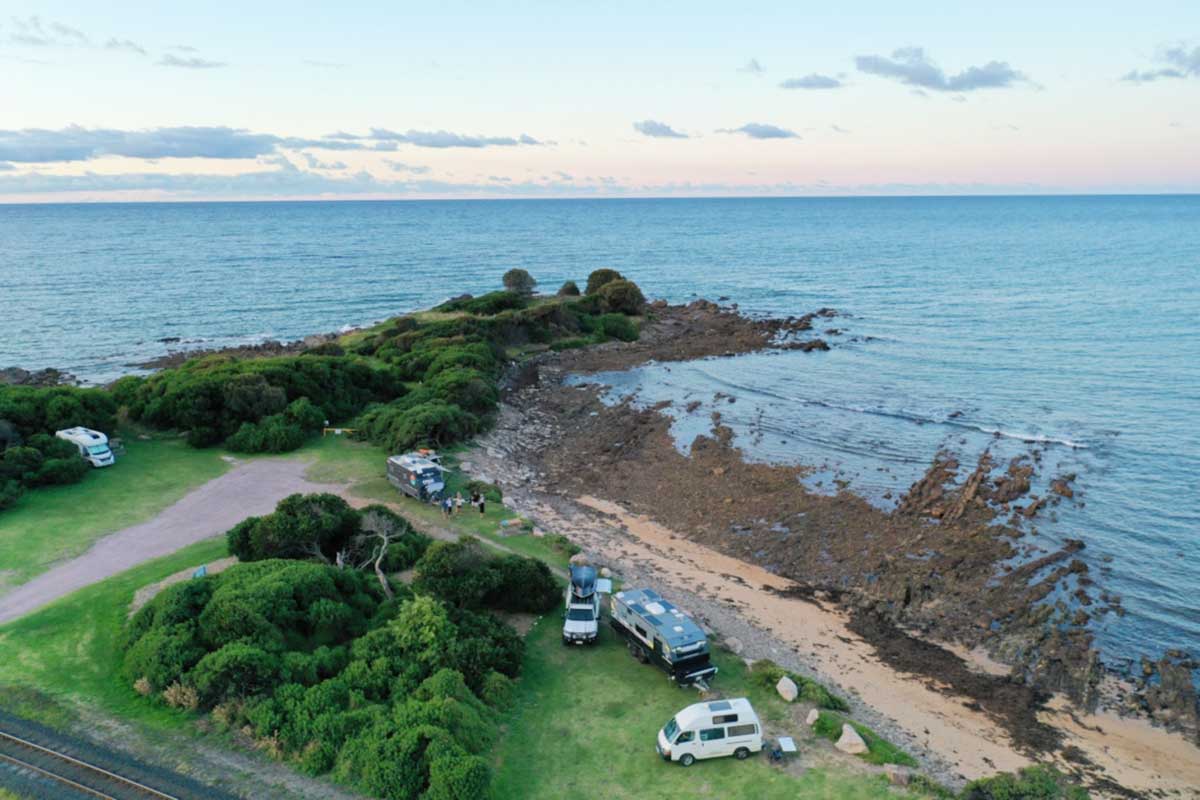
Hall Point Sulphur Creek Camping is a free campsite set on a penguin colony! Located right on the water, this site offers amazing views over the water, as well as a front row seat to watch hundreds of penguins who call this place home. This basic campsite is only suitable for fully self-sufficient caravans and motorhomes, and as such has become a popular spot for such travellers to stay the night before moving on the Devonport and catching the Spirit of Tasmania back to Melbourne the following night.
Travellers are allowed to stay a maximum of 48 hours. Because of its closeness to the penguin colony, it is especially important that all grey water is contained and taken when travellers leave, as this helps ensure the wildlife stayed protected.
Location: 286 Preservation Drive, Sulphur Creek.
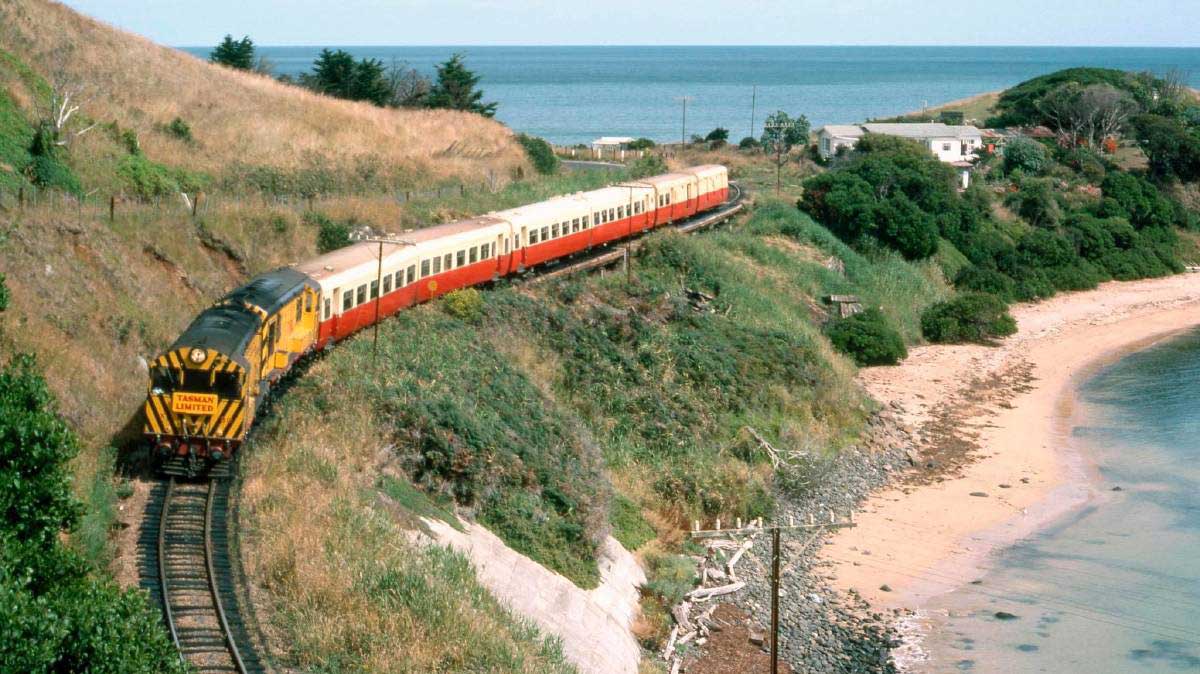
Though there are no passenger sevices on the line today - in fact the line now stops at Burnie - there was once a passenger train which ran from Wynyard to Launceston, and then on to Hobart. Called the Tasman Limited, the service started in 1954 running from Hobart to Launceston to Wynyard, with 26 stops in between, and ended in 1978. It was considered the state’s great luxury passenger train.”

The patriarchal, eight-hour train service allowed Tasmanians, especially those living in regional areas, to travel and see other places in the state. It was very comfortable for its time, there was a buffet car to get something to eat, and people really enjoyed the trip. The train used to carry a name board, so the Hobart to Launceston was called the Tamar and the Launceston to Wynyard was called the Table Cape, but going Wynyard to Launceston it was called the Launcestonian, and when it left for Hobart, it changed to the Derwent,” Mr Brun said.
Toni-Anne Carrol worked the Wynyard to Western Junction line. Her most vivid memory of the train was when it derailed near Campbell Town; passengers were loaded onto a bus, driven across paddocks and fed at the Campbell Town pub, before being driven to Hobart. “I was 19 and it was my first year of uni - there was no warning, just a massive thud and over we went. I went flying from my window seat.” Carol later worked on the Tasman Limited as a hostess and was famous for her amusing commentary, and everyone used to mimic it.

The Tasman Limited was very well patronised in the ‘50s and ‘60s but by the 1970s everyone was traveling in cars and the train became unnecessary. During its most popular time the train is believed to have carried up to 200 passengers, but towards its end, numbers dwindled to around 15 passengers per trip.
In common with many railway systems, Tasmania's was of necessity exploited by overuse and under-maintenance during the Second World War. By the 1970s passenger patronage was in such decline, there was insufficient revenue being generated to warrant upgrading Tasmania's passenger trains, and a decision was made to withdraw the service. The last passenger train from Wynyard to Hobart ran on 18th July 1978. The the ABC studios have been built on the site of the former Hobart railway station. Much of the passenger rolling stock went to the Tasmanian Railway Museum at Glenorchy, with some going to the Don River Preservation Railway based in Devonport.
A PocketOz Travel and Information Guide
Design and concept © Stephen Yarrow | Email | W3Layouts | Test