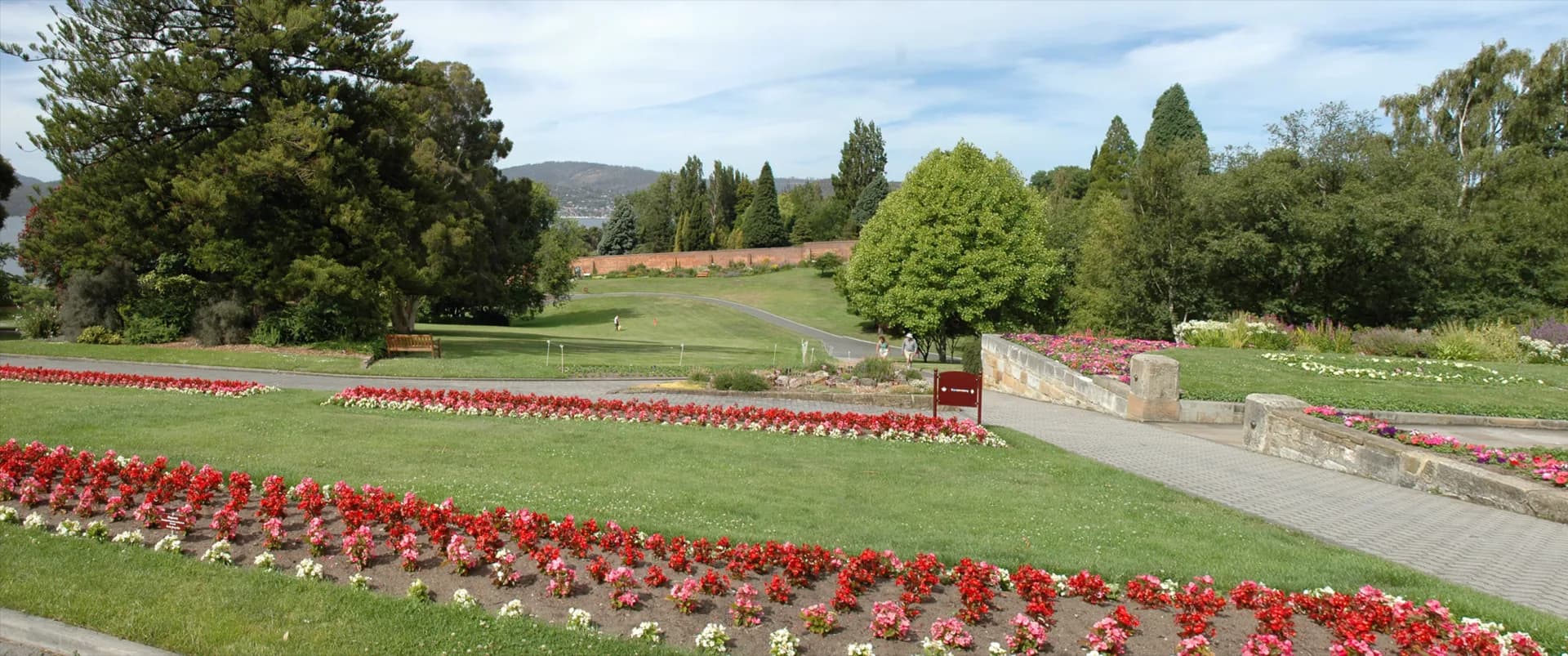

Hobart's green spaces are not a single park system with one character. They range from formal nineteenth-century squares to native grasslands, riverside paths, memorial plantings and gardens created around older industrial landscapes. Several are close enough to join on foot, but each rewards a slower look.
The Queens Domain and botanical gardens
The Queens Domain rises immediately north of the central city. Its native grassy woodland is as important as its sports grounds and views. The City of Hobart describes the Domain as habitat for threatened lowland temperate grassland and some of Hobart's oldest white gums. The City to Gardens Circuit links the edge of the CBD with the Royal Tasmanian Botanical Gardens.
The botanical gardens occupy a sheltered part of the Domain above the river. Their collections and layout have changed over two centuries, so the landscape is both a living plant collection and a record of how public gardens were understood at different times.
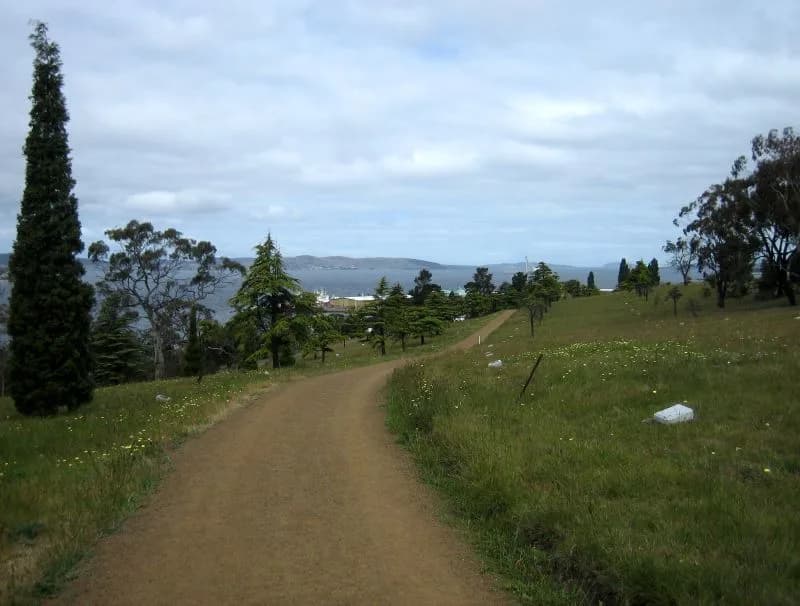

Soldiers Memorial Avenue crosses the Domain. Its trees commemorate Tasmanian service personnel who died in the First World War. The avenue should be read as a memorial landscape, while the surrounding grasslands retain ecological values that predate it.
Parks in and around the centre
St David's Park occupies part of Hobart's first burial ground. Memorial walls preserve many headstones removed when the site became a public park. Franklin Square, opposite the Town Hall, is a formal civic space. Railway Roundabout is smaller and busier, but its fountain and layered road setting make it one of the city's most distinctive twentieth-century pocket parks.
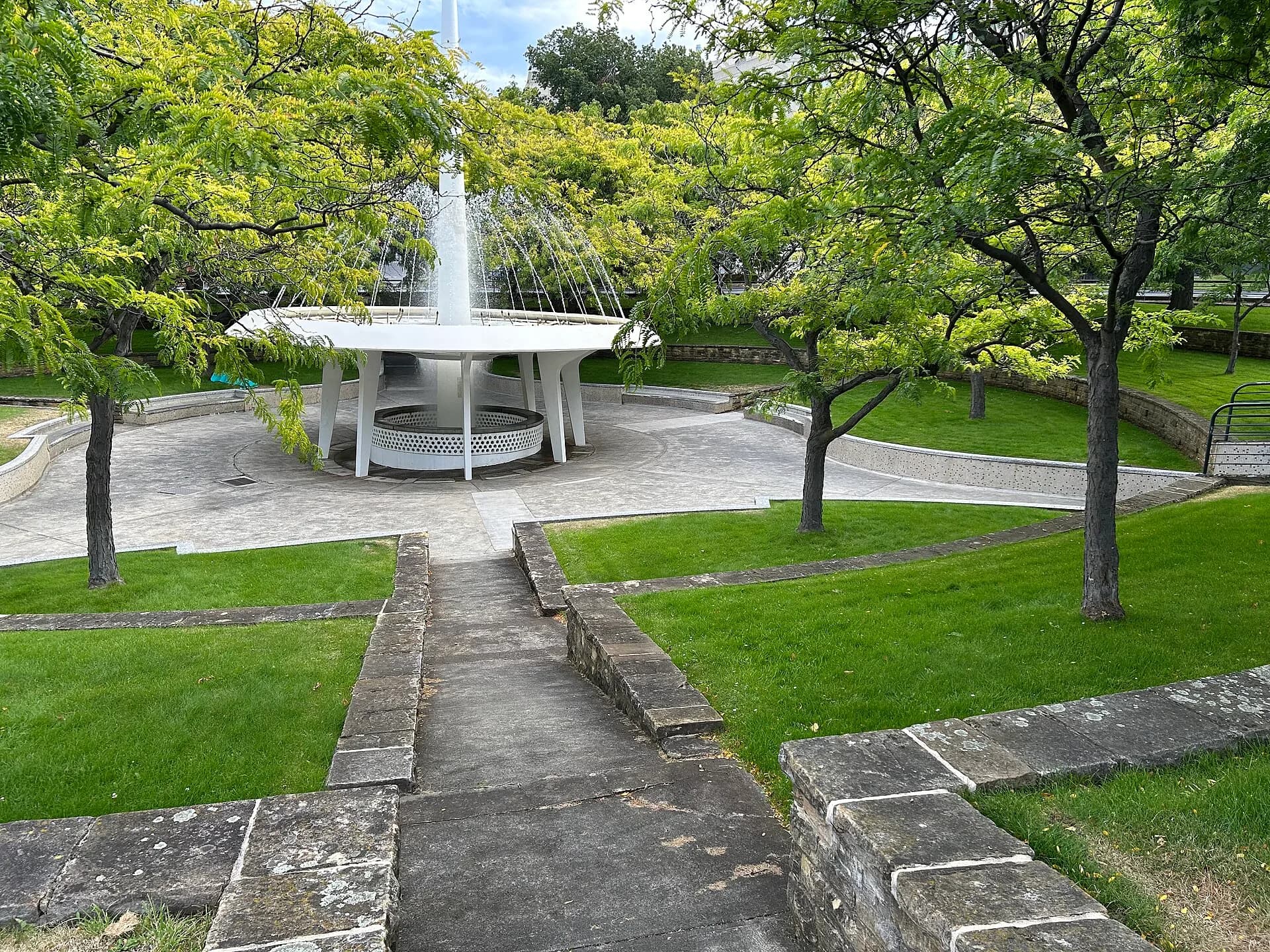

These central parks are useful pauses rather than full-day destinations. Their value comes from how they connect the waterfront, civic buildings and nearby streets. Walk between them and the changes in ground level reveal old shorelines, reclaimed land and the steep rise towards the foothills.
Cascade Gardens and the rivulet
Cascade Gardens sits beside the Hobart Rivulet below the brewery. The City records its development from the Cascade Tea Gardens, opened in 1894, into a public park. Mature trees, lawns and seasonal plantings now frame a section of the rivulet track.
The setting also explains why industry developed here. Water from the rivulet powered and supplied enterprises along the valley, including the brewery, while the Cascades Female Factory operated nearby. A visit makes more sense when the garden, watercourse and convict site are understood together.
Choosing a park
For a short central walk, combine St David's Park and Franklin Square with the waterfront. For native vegetation and longer views, use the Domain trails. Cascade Gardens suits a picnic or a stop on the rivulet track. Facilities, dog rules and temporary works vary, so check the City of Hobart park listing before relying on a particular barbecue, toilet or access point.