The names of rivers, coastal features, districts and their streets tell a lot about the history of a place. The grid pattern layout of the main roads of suburban Melbourne, Adelaide and Perth indicate that not only did some thought and planning go into both their design and growth, they are built on relatively flat ground. By contrast, Brisbane, Sydney and Hobart are the opposite; their inner city streets are set in grid patters but the rest resemble a bowl of spaghetti dropped onto the floor from a great height. In the case of Hobart, this very much reflects the terrain the early road builders and town planners had to work around.
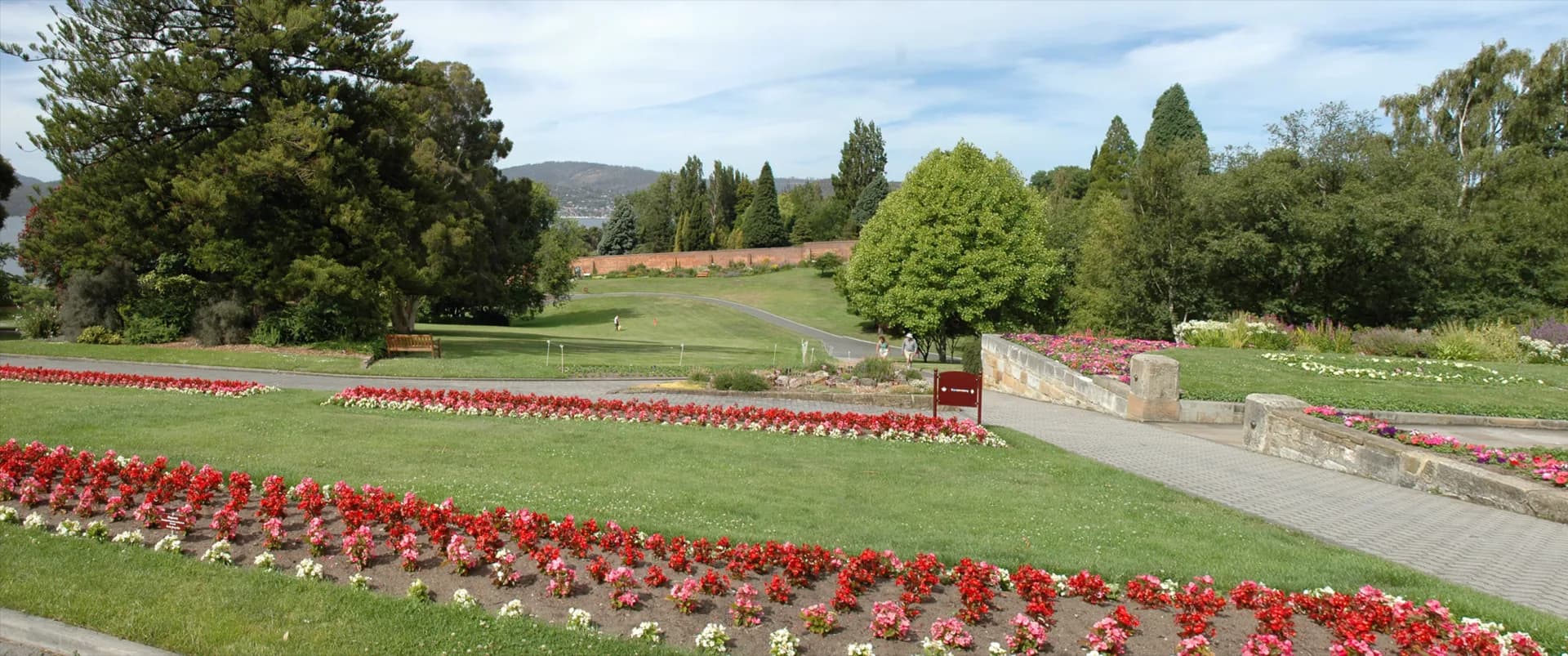
Hobart's inner suburb of Sandy Bay, located immediately south of the central business district, adjoins the suburb of Battery Point, and has a long frontage to the River Derwent. Sandy Bay is known for its many large homes, and as one of the city's prestigious areas. In the more southern areas of Sandy Bay, close to the water and also high on the slopes of Mt Nelson, are some of Tasmania's most expensive real estate. It is also the site of the Hobart campus of the University of Tasmania, and the private schools, Fahan School, The Hutchins School, and Mount Carmel College, Sandy Bay.
Claremont owes its origins to the Cladbury chocolate factory at the locality. After World War I, British confectionery manufacturer Cadbury merged with J S Fry and then Pascall to become Cadbury-Fry and Pascall. The new company, ready for expansion internationally, decided to build a factory in Australia. The Cadbury complex at Claremont on Windemere Bay and suburb where the company's workers would live is built on the same model as Bournville, Cadbury's original model village - a garden suburb of winding avenues and cul-de-sacs that would 'alleviate the evils of modern more cramped living conditions'.
Bellerive, a suburb of the City of Clarence, sits on the eastern shores of the Derwent Estuary. To the north Bellerive is bordered by the small foothills of Waverly Flora Park. The area around Bellerive Quay and the boardwalk has a quaint village feel, with many historical homes and buildings in the area, some of which date from the early 19th century. The old Bellerive Post Office, which was built in 1897, now houses both the Sound Preservation Museum and the Genealogical Society of Tasmania. At the point of Kangaroo Bluff is the 19th century British fortress known as Kangaroo Battery (built 1885) which is now a public park.
Sitting in Hobart's backyard a couple of minutes walk from the city suburbs of West Hobart and Mt Stuart is an area of native bushland that spreads across the slopes and peak of Knocklofty. From its network of walking tracks there are wonderful views over the city, down the Derwent estuary and up to Mount Wellington. Used by early settlers as a source of firewood, quarry stone and for rough grazing land, Knocklofty has changed little, and its heathland and open woodland flora and fauna communities thrive in the rough, steep terrain.
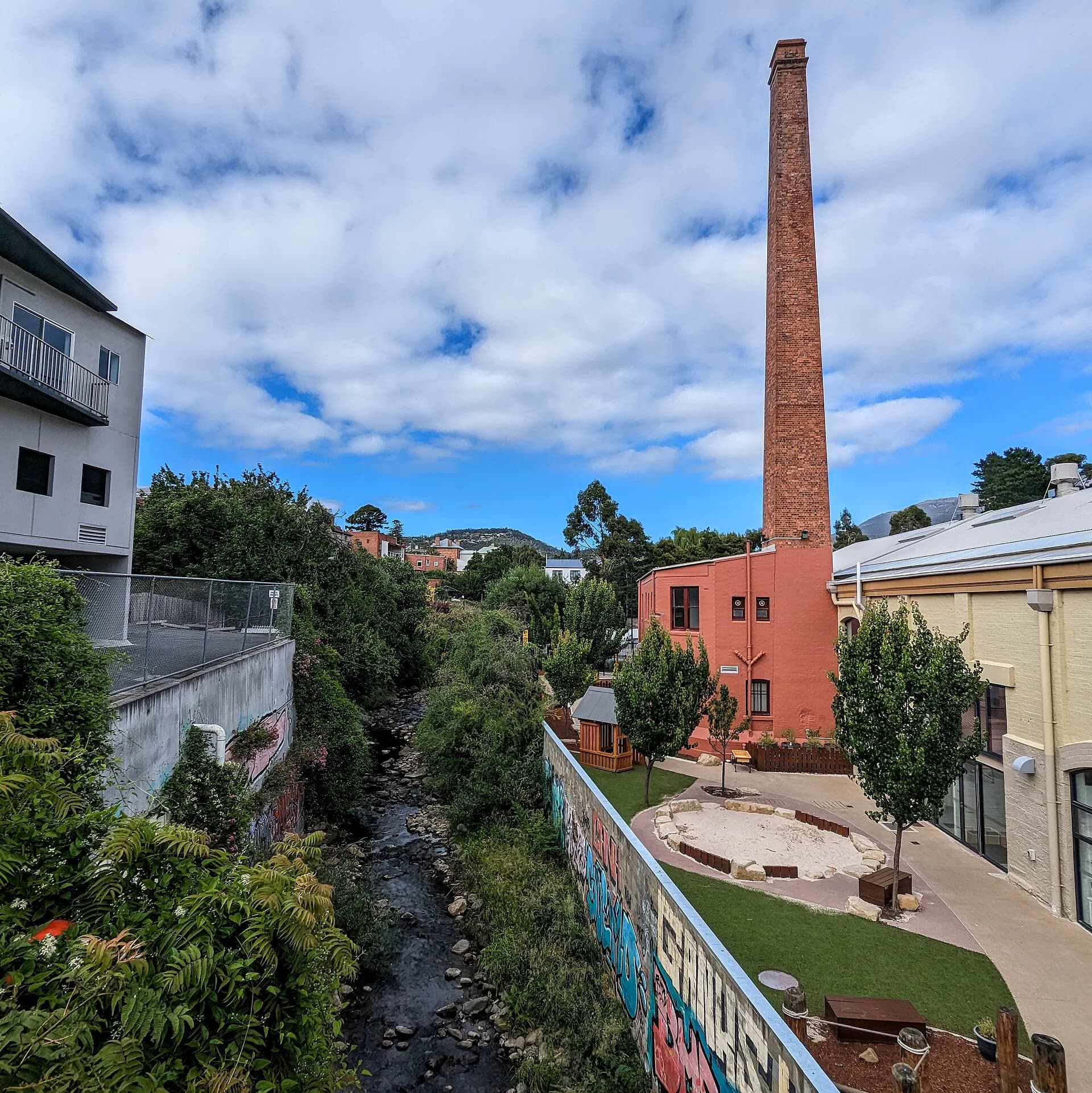
If you take even a brief look at the maps of Australia's state capital cities, you see that the smaller waterways around most cities and their suburban areas are named rivers or creeks - except for Hobart. Here they are called rivulets, a word meaning 'small stream', from Latin 'rīvulus', meaning stream, and the sufix 'let', meaning small. In Britain, from where the use of the word was imported to describe and name Hobart's small watercourses, a rivulet is a stream, small in length, that feeds directly into a large river, rather than join a tributary first. Therein lies the reason for Hobart - and Hobart alone, among the capital cities - having rivulets. Hobart sits snugly in the shadow of Mt Wellington and Mt Nelson from where fresh water run-off travels only a short distance along the numerous rivulets that criss-cross the hillsides behind the city, before emptying into the Derwent River.
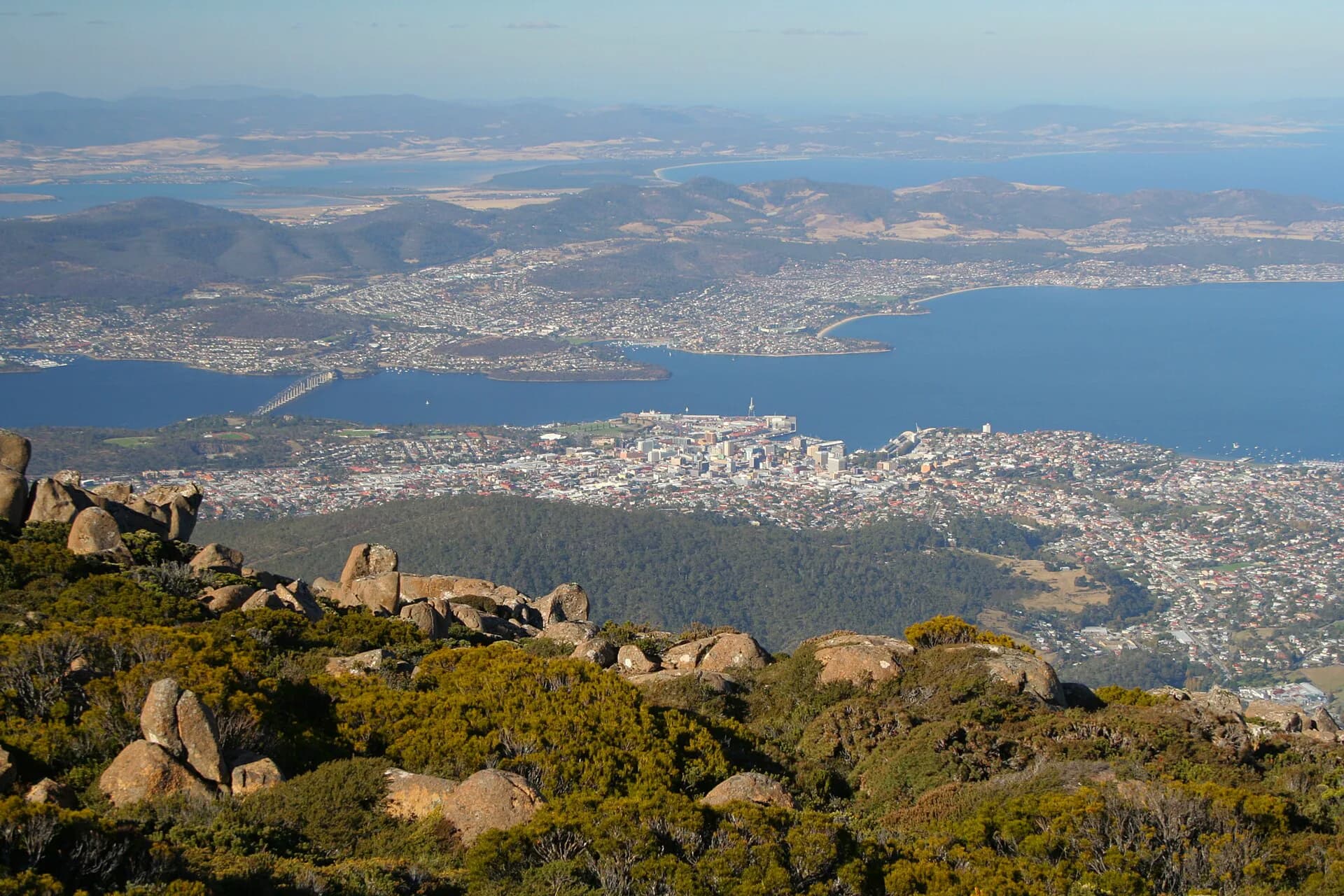
Hobart is defined by Mt. Wellington. Rising 1270 metres above Hobart's harbour and the wide Derwent River, it forms a stunning backdrop to the city while the spectacular vista from the top encompassing the surrounding islands and estuaries is truly world class. The summit may be a short drive from the city centre but is a world removed, a true mountain environment complete with unpredictable weather, stunted sub-alpine flora, and a complex of buttresses, outcrops, screes and gullies. The short 21-kilometre drive to the summit takes you from temperate rainforest to sub-alpine flora and glacial rock formations, ending in panoramic views of Hobart, Bruny Island, South Arm and the Tasman Peninsula.